Reef Manta vs Oceanic Manta: How to Tell Which One You Saw in the Maldives

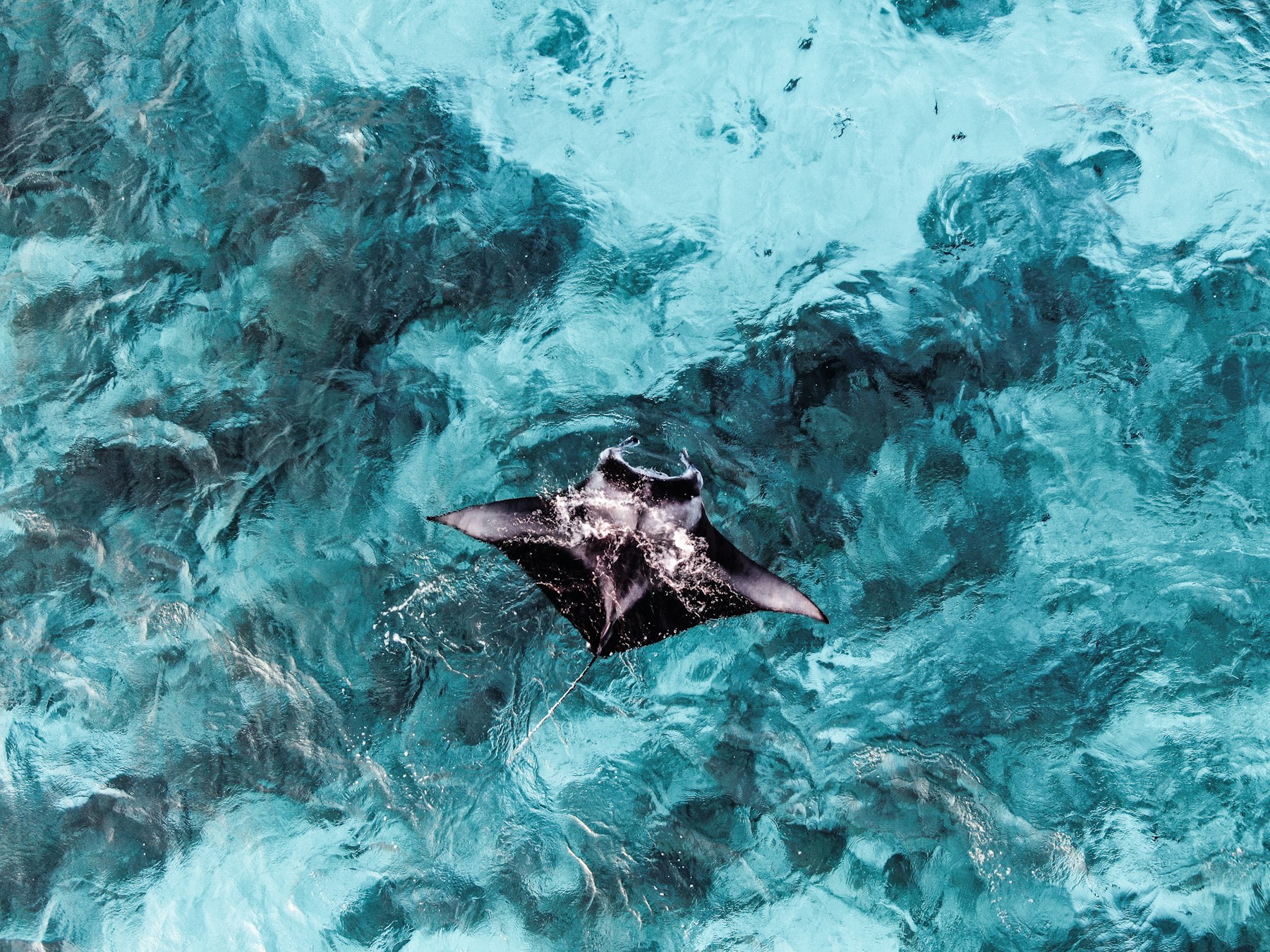
You come up from a snorkel in Baa Atoll, buzzing, and someone on the boat asks which manta it was. It is a fair question. There are two species of manta ray, and they look similar until you know where to look. In the Maldives the answer is almost always the same, but not always. Here is a practical guide to reef manta vs oceanic manta, so you can tell them apart in the water and in your photos afterwards.
Two species, one family
The reef manta (Mobula alfredi) and the oceanic manta (Mobula birostris) were only recognised as separate species in 2009. Both are filter feeders that sweep plankton into their mouths with the two fleshy lobes on either side of the head. Both visit cleaning stations, where small wrasse pick parasites off their skin. The differences are in size, habitat and a few markings that are easy to read once you have seen them.
Size and habitat
Reef mantas are the smaller of the two. Most adults you meet in the Maldives span around 3 to 3.5 metres from wingtip to wingtip, with big females pushing towards 4 or more. They live close to coastlines and reefs, and they come back to the same cleaning stations and feeding spots again and again.
Oceanic mantas are bigger, with wingspans recorded up to about 7 metres. They spend most of their lives offshore, moving along open-ocean currents, and they tend to be more wary of people. You see them where deep water comes close to land.
The markings that give it away
Look at three places on the animal:
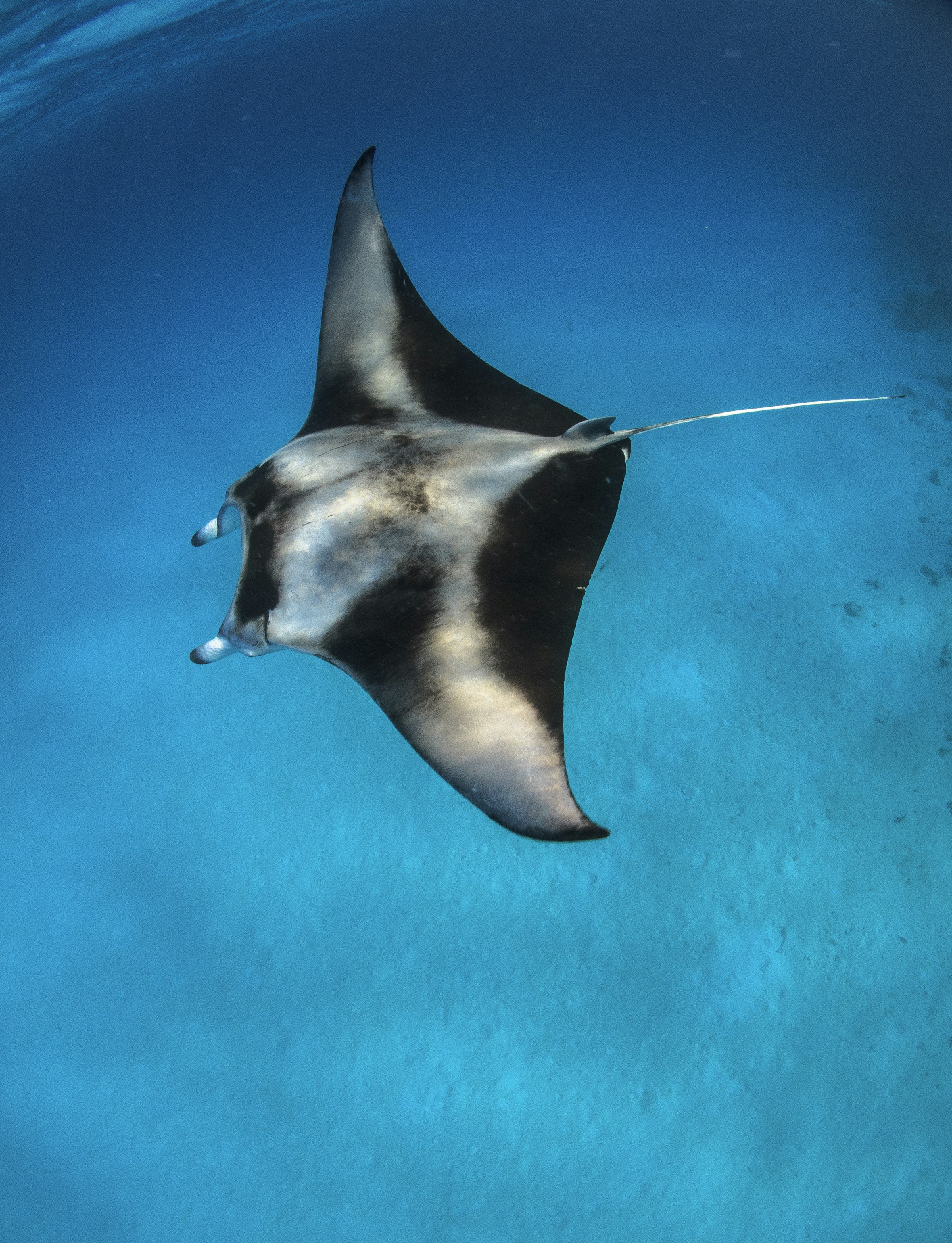
- Shoulder patches (on the back). A reef manta has pale patches that fade softly into the dark, often in a loose Y shape. An oceanic manta has crisp white patches with hard edges that form a bold T shape across the shoulders.
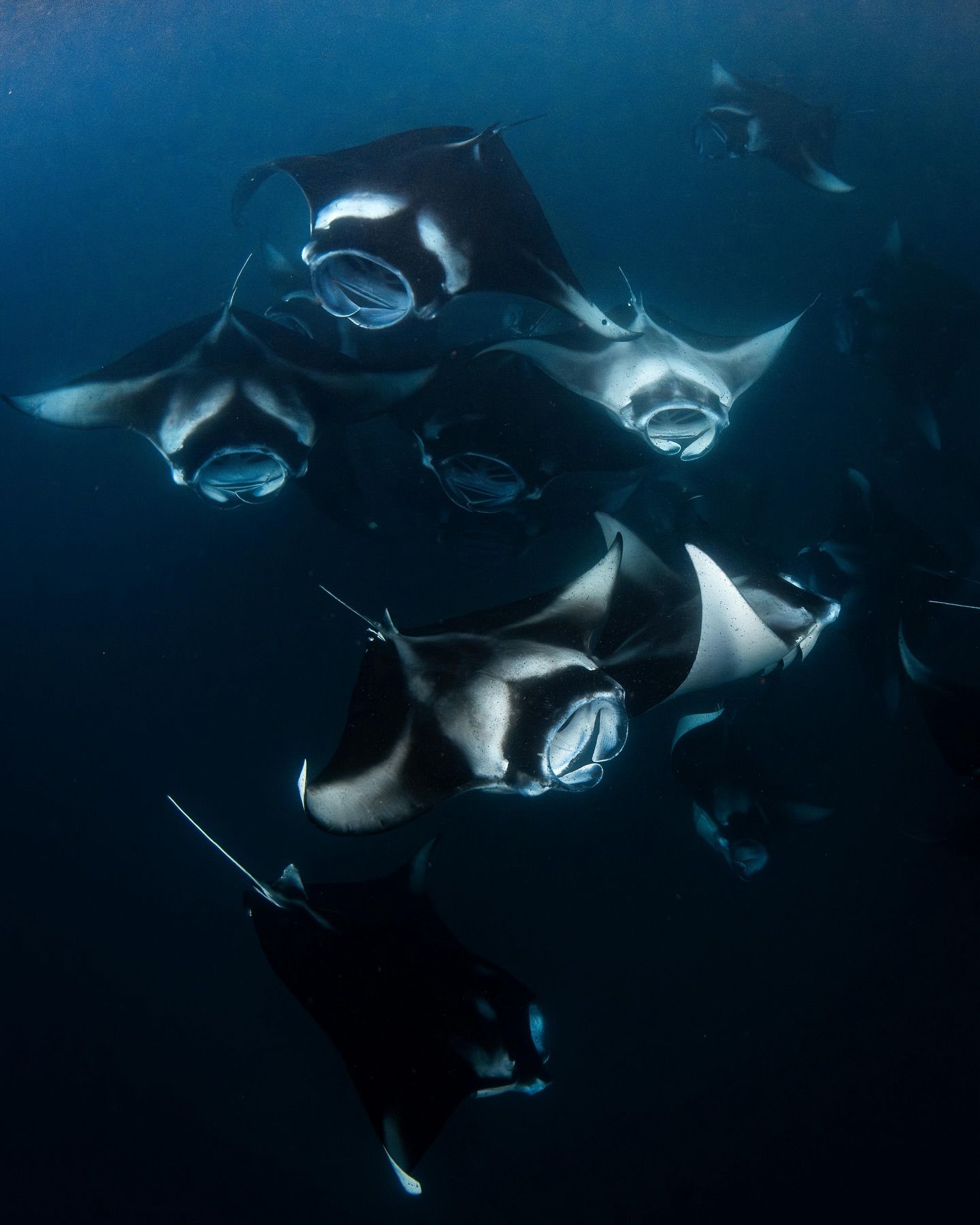
- The mouth. Reef mantas usually have a white or pale mouth. Oceanic mantas have a dark grey or black mouth.
- The belly. On an oceanic manta the spots tend to cluster low on the belly, below the last gill slits, and there is often a dark V-shaped band along the back edge. On a reef manta spots often sit between the gill slits and the trailing edge stays pale.
Some mantas are almost entirely black. These melanistic animals exist in both species and are seen regularly in the Maldives, so colour alone does not settle it. Go back to the mouth and the shoulder pattern.
What you see in the Maldives
In the Maldives, the reef manta vs oceanic manta question is mostly settled by geography. The country has the largest known population of reef mantas in the world. The Maldivian Manta Ray Project, run by the Manta Trust, estimates around 5,000 animals and has identified more than 4,300 individuals from photographs. In Baa Atoll, feeding events in Hanifaru Bay can bring together more than 150 reef mantas at once. If you saw a manta on a typical snorkel in Baa, Ari or the Malé atolls, it was almost certainly a reef manta.
Oceanic mantas do turn up, mainly along outer reef channels and in the far south of the country around Fuvahmulah, where deep water sits close to the island. Treat one as a rare and lucky sighting rather than something to plan around.
How to ID your own manta
If you are still unsure about reef manta vs oceanic manta after a dive, your photos will answer it. The spot pattern on a manta's belly is unique and does not change as it grows, so researchers use it like a fingerprint. If you got a clear, straight-down shot of the underside, you can submit it to the Manta Trust's IDtheManta database. Sometimes you get a name and a sighting history back, which is a lovely thing to receive a month after a trip.
To get a usable ID photo, stay low in the water, let the manta pass over or beside you and shoot the full belly in one frame. Never chase or dive down onto one. For more on how to behave around them, read our guide to snorkelling with manta rays.
Why the difference matters
Getting reef manta vs oceanic manta right is not just trivia. Both species are listed as threatened on the IUCN Red List: reef mantas as Vulnerable and oceanic mantas as Endangered. They grow slowly and have very few pups, so populations take a long time to recover. Every ID photo helps researchers track where they go and how many there are, which feeds directly into protection like the rules at Hanifaru Bay.
Swim with reef mantas in Baa Atoll
Our Giants of the Maldives expedition is built around reef mantas and whale sharks, with a beachfront base in Baa Atoll and daily ocean trips including Hanifaru Bay. The next departure runs 17 to 23 August 2027, timed around the full moon when the plankton peaks. Bring a camera, get your belly shots and we will help you submit them. Applying is free.