WhatsApp

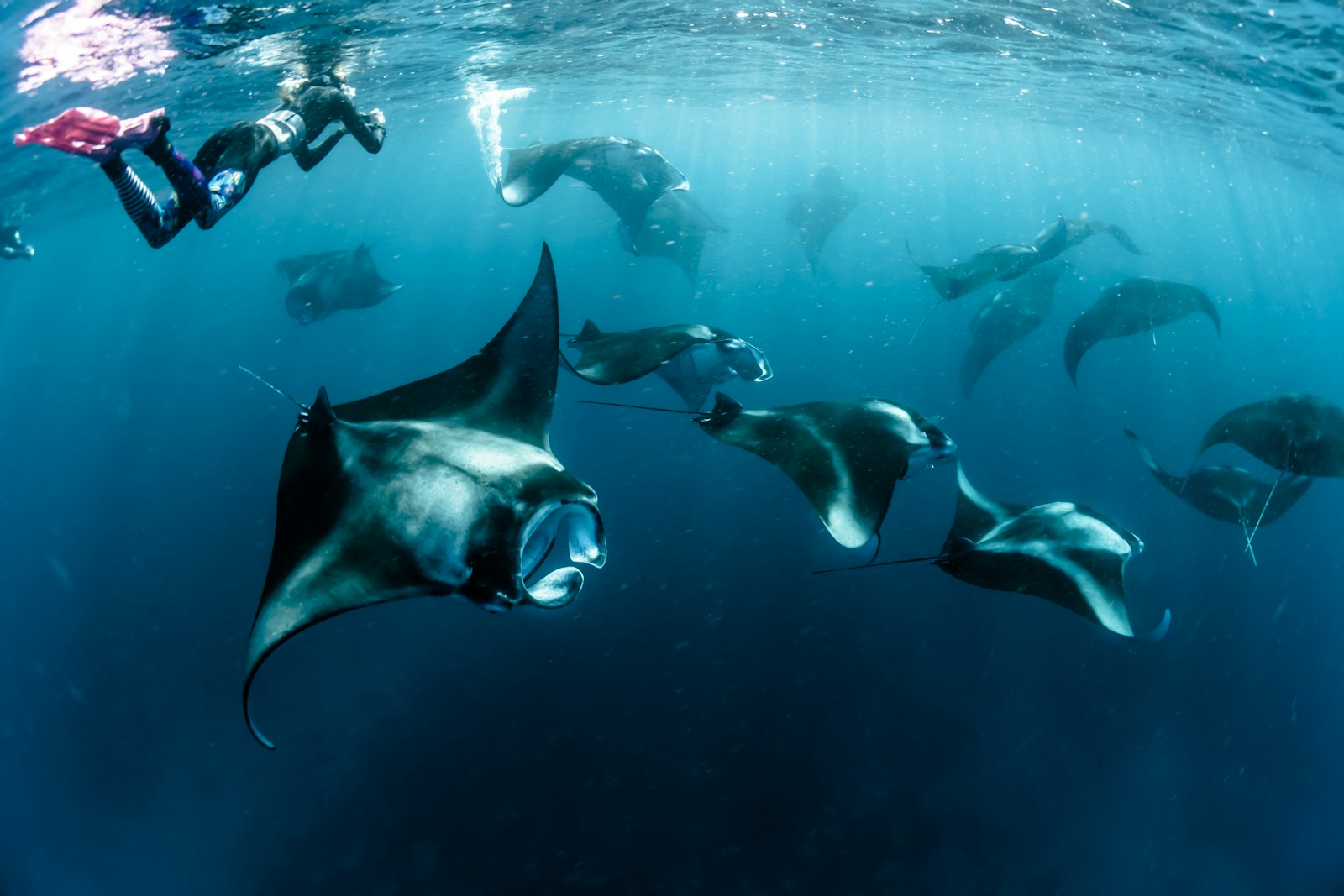
Ask ten people when the mantas show up at Hanifaru Bay and you will get ten answers, but they all circle the same thing: the moon. Hanifaru Bay full moon vs new moon is the question that decides whether your week in Baa Atoll is good or unforgettable, so it is worth understanding before you pick dates.
Hanifaru is a small, funnel-shaped bay on the edge of Baa Atoll, inside a UNESCO biosphere reserve. It is not a manta spot because of the reef. It is a manta spot because of plankton. When the tide is strong, water pushes through the channel and piles plankton into the narrow end of the bay. Reef mantas and whale sharks follow the food and swirl through it, sometimes dozens at a time, sometimes more.
The strongest tides in the Maldives come around the full and new moons, the spring tides. That is the whole secret. The moon does not call the mantas. It moves the water, and the water moves the plankton.
Most people pick the full moon, and for good reason. The days right after a full moon tend to give strong, steady currents through the channel, and the guides at Dharavandhoo and Baa Atoll know the pattern well. You often see mantas in feeding mode, doing barrel rolls and chain feeding with their mouths open wide. The nights around the full moon are also bright, which makes beach evenings easy and gives you a good excuse to stay up late.
The catch is that a full moon week is also the busiest week. Every guesthouse and every boat operator in the atoll knows the same thing, so the bay can be crowded. Hanifaru is a protected area with limits on how long boats can stay and how many swimmers can be in the water, and those rules exist because of the crowds.
The new moon gives you spring tides as well, and it often gets less attention. Dark skies mean the stars are excellent at night, and the bay can feel calmer. Plankton blooms are not guaranteed on either moon, so the new moon is not a worse bet, just a less obvious one. If you hate crowds, it is worth considering.
There is one practical difference. Around the new moon the bay can be slightly harder to read, because the tide timing shifts and the guides watch conditions day by day. Flexibility matters. A good crew will change plans at breakfast if the bay looks promising.
The manta season in Baa Atoll runs roughly from May to November, during the southwest monsoon, when the plankton is richest. Within that window, August is a strong month. Water temperature sits around 29 to 30 degrees Celsius, so a thin rashguard is plenty. We wrote a full breakdown in our post on the Maldives in August, and our seasonal manta guide covers the other months.
Even on a perfect moon, nature does what it wants. Some days the bay is wall to wall with mantas, and some days it is empty and the mantas are feeding on the open reef instead. That is why a week beats a weekend. Spread your time over several days around the moon, not on a single day, and keep the afternoons for reef snorkeling, turtles, eagle rays and sandbanks. Whale sharks are often seen on the way to the bay or on the outer reefs, so keep your mask handy on every boat ride.
Look up the moon phase for your year and plan your week around it. For the strongest manta odds, aim to be in Baa Atoll for the few days either side of the full or new moon. Book a week, not a long weekend, so one bad tide does not ruin everything. Read our guide on Hanifaru Bay for the rules and etiquette, and remember that snorkeling is the only way in. No scuba is allowed in the bay.
We build the Maldives week around the moon on purpose. In 2027, the first departure begins on the full moon of 17 August, with the big manta days right after it. The second departure runs 25 to 31 August and ends on the new moon, with the manta days saved for the end of the week. Both stay in Baa Atoll, both are snorkeling, and groups are capped at 12. If you want to see what the week looks like, have a look at our Giants of the Maldives expedition, where the dates, price and daily plan are all laid out.