Humpback Whales in Norway in Winter: Seeing Orcas and Humpbacks Together


Most people book northern Norway for the orcas. Then a humpback surfaces fifty metres off the bow, blows a column of mist into the cold air and lifts a tail the width of a small car, and suddenly the trip has two headliners. Humpback whales in Norway in winter are not a side show. On a good day you watch both species working the same herring in the same fjord. Here is how that happens, when it happens and what to expect if you come in late January.
Why the whales come to the fjords
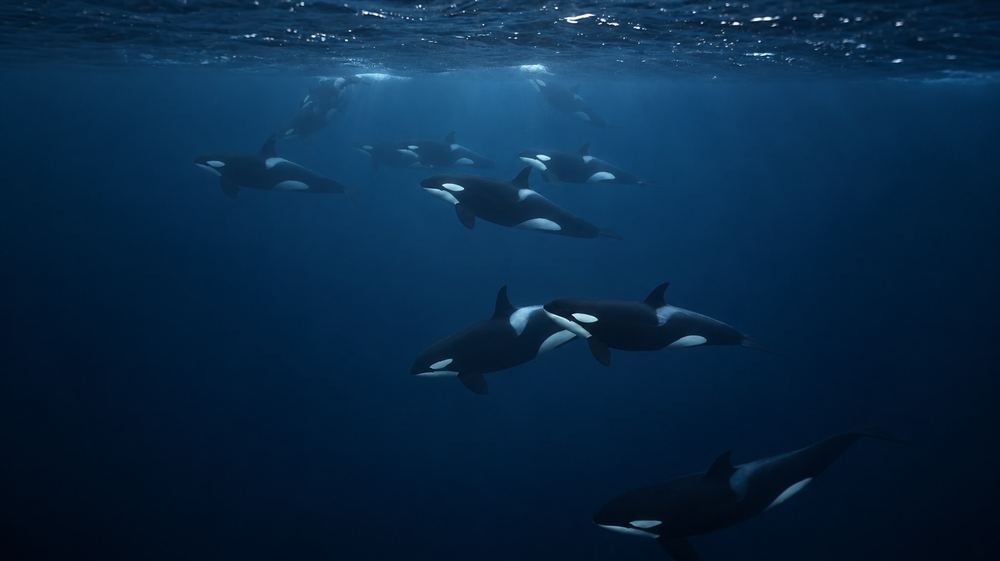
Everything follows the herring. Norwegian spring-spawning herring spend the dark months packed into coastal waters and fjords in Troms, and over the past several winters the biggest concentrations have sat around Skjervøy and Kvænangen. That is a lot of protein in one place, at a time of year when the open sea has little else to offer. Orcas move in to hunt it. Humpbacks, on their way south from summer feeding grounds further north, stop to fill up before the long migration to their breeding areas.
The herring do not read the guidebooks, so the hotspot shifts. One winter it is the outer islands, the next it is deep inside a fjord arm. Local skippers track it week by week, which is why it pays to go with people who are on the water every day.
When humpbacks are around
The window for humpback whales in Norway in winter is fairly tight. Humpbacks start turning up in numbers from around November. December and early January are usually the strongest period. By late January some of them have already started heading south, so you see fewer than you would in mid-December, but the ones still feeding are often very settled and easy to watch.
Orcas tend to stay with the herring a little longer, and January is a reliable orca month. If orcas are your priority and humpbacks are the bonus, late January is a good trade. For more on daylight and conditions that month, read orcas in Norway in January.
How to tell them apart from the boat
You will get the hang of it within an hour, but it helps to know what you are looking at.
- The blow. A humpback blow is a tall, bushy column, three metres or more on a still day. Orca blows are short and hard to spot against grey water.
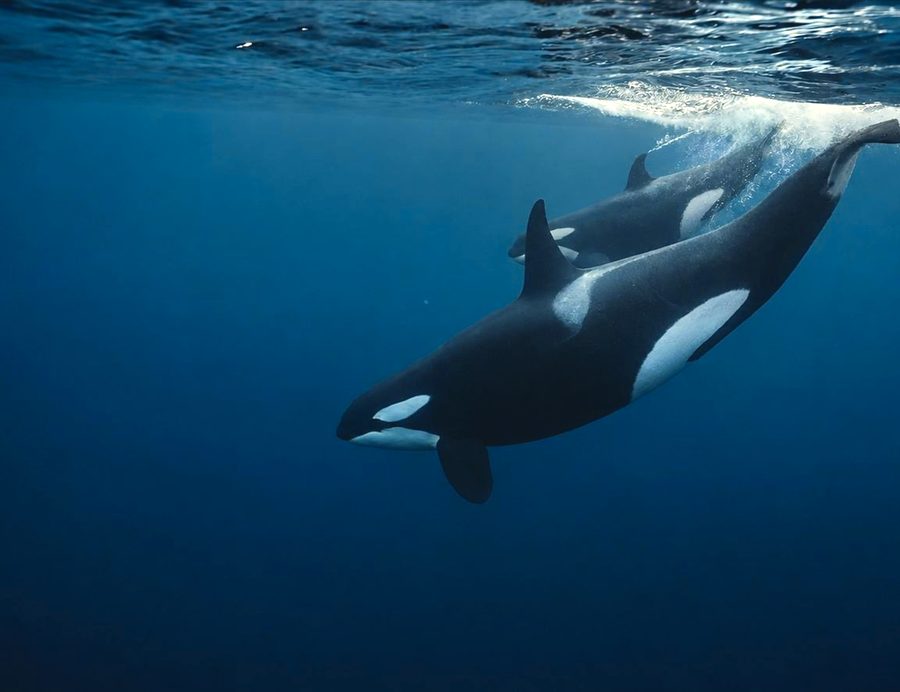
- The fin. Orcas show a tall, upright dorsal fin, up to almost two metres on an adult male. A humpback has a small, stubby fin set on a hump.
- The tail. Humpbacks raise their flukes before a deep dive. The black and white pattern underneath is unique to each whale, which is how researchers tell individuals apart.
- The pace. Orcas move as a family group, fast and coordinated. Humpbacks roll slowly, often alone or in loose pairs.
The moment they share the herring
This is the part people talk about at dinner. Orcas hunt herring by carousel feeding: they circle a school, blow bubbles and flash their white bellies to drive the fish into a tight ball near the surface, then stun them with tail slaps and pick them off one by one. We explain the technique in what is carousel feeding.
Humpbacks have learned that an orca-made herring ball is an easy meal. A humpback will sometimes come up from below, mouth wide open, and take a huge gulp out of the middle of it. The orcas scatter, regroup and start again. It looks chaotic, and it is over in seconds, so keep your camera up and your eyes on the water rather than on your screen.
In the water or on the boat
When we get in, it is with orcas. Humpbacks are watched from the boat, which is how most people see humpback whales in Norway in winter anyway, and that is no hardship: a 30 tonne animal lunge feeding next to you is plenty close. The water sits around 4 to 7°C in January, and we hand out 10 mm wetsuits, hoods, gloves and boots. Getting in is always optional. If you are unsure about the cold or your swimming, read do you need to be a strong swimmer and drysuit or wetsuit.
Getting good photos in low light
Late January light is soft and short. The sun is only just coming back over the horizon this far north, so you work with a few hours of blue and pink rather than bright daylight. Bump your ISO, use a fast shutter for tail lifts (1/1000 s or quicker) and shoot in bursts when a humpback arches its back, because the fluke comes up a few seconds later. Keep a spare battery in an inside pocket. Cold drains them fast. More tips are in our orca photography guide.
See them with a small group
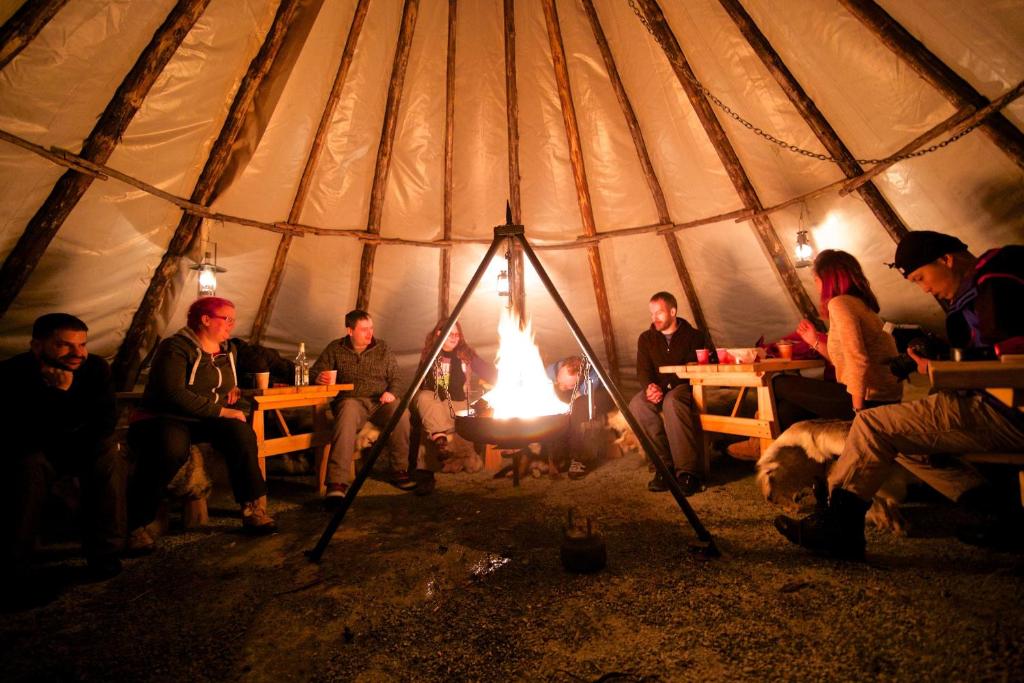
If you want to see humpback whales in Norway in winter and spend real time with orcas too, a small boat with a local skipper makes the difference. Our Orca & Lyngen Alps expedition runs 21 to 27 January 2027 from Reinfjord, a fjord village you can only reach by boat. You get three days on the water following the herring for orcas and humpbacks, then a day of dog sledding in the Lyngen Alps and a visit to a Sámi reindeer camp. There are eight places, the gear is included and applying is free.