WhatsApp

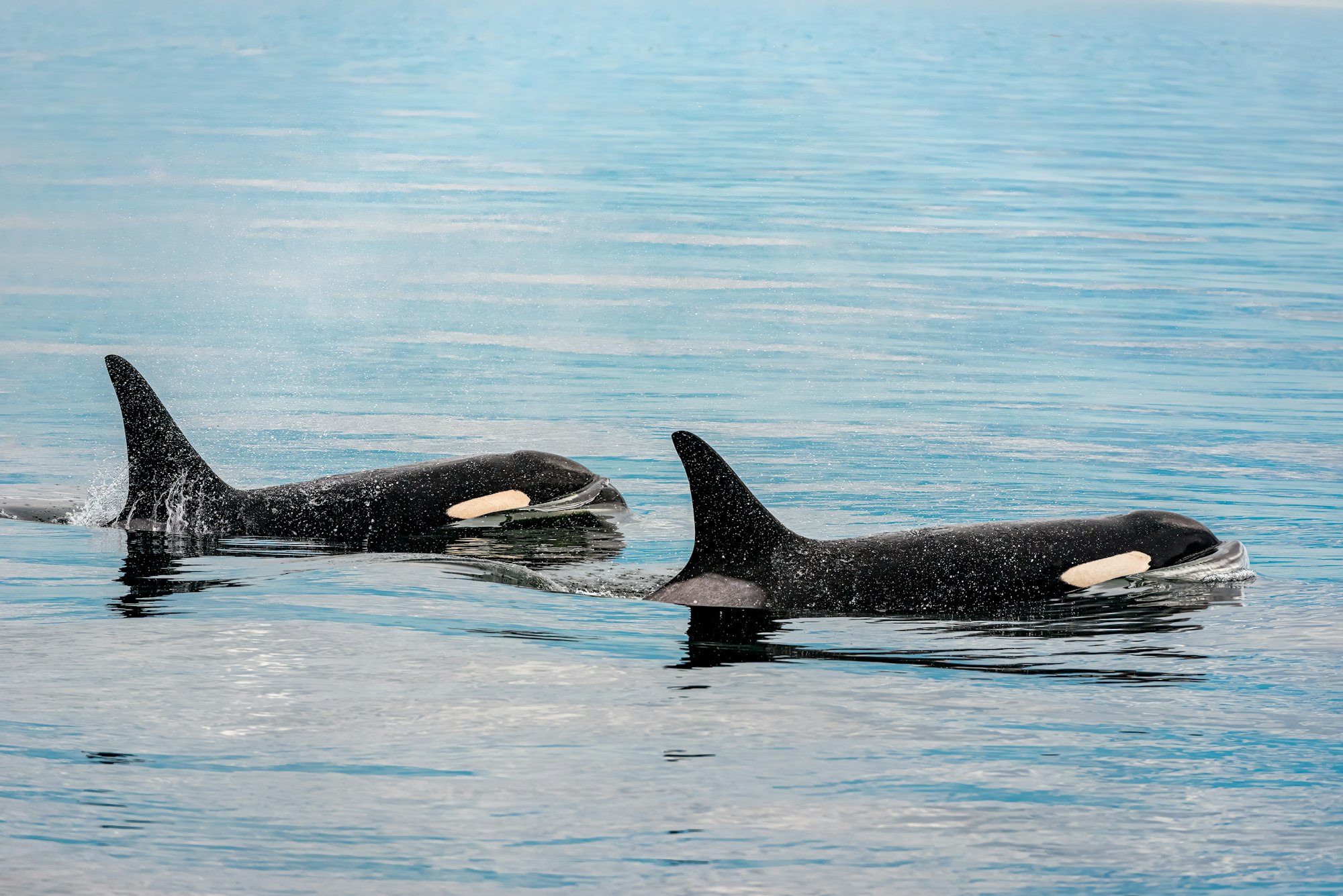
Most orca stories in Norway start in November, when the herring pack into the fjords and the first boats go out. January gets less attention, and that is a shame, because it has its own rhythm. The light is coming back, the crowds are gone and the animals are still there. If you are looking at orcas in Norway in January, here is what the month actually feels like, from daylight hours to the cold in the water.
Skjervøy and Reinfjord sit well north of the Arctic Circle, and the polar night is real. In early January the sun stays below the horizon for weeks. What you get instead is a long, soft blue twilight around midday, with pink and orange on the snowy ridges. Towards the end of the month the sun starts to climb back, and by the last days of January you have a few hours of proper light and a brighter sky overall.
For swimming and photography this matters. Short days mean you plan around the light, so boat days start with a hot breakfast, and the best water time is usually the middle of the day. It also means you spend long evenings at base with a sauna, a hot meal and the group. If you like the idea of a trip with a slow, cosy evening rhythm, January delivers. We wrote about the other end of the season in why November is the best month for Arctic wildlife, and the light is the biggest difference between the two.
Yes, with a caveat. The orcas follow the herring, and the herring move through these fjords from roughly November into January. By the second half of January the herring may be spread out or sitting deeper, so the sightings are less predictable than in the peak weeks. Some days the whole pod is hunting right next to the boat. On other days you spend hours looking, then find them at the far end of the fjord.
That is why the number of days on the water matters more than anything else in a January trip. Three full orca days give you three separate chances, and the crew can move the boat to wherever the herring went. Humpbacks often share the same water, which adds a second reason to be out there. Our post on when to see orcas in Norway goes deeper on the season, and what carousel feeding looks like explains what the orcas do once they find a herring ball.
The sea sits at around 4 to 7 degrees Celsius in January, and the air can drop well below freezing, with wind on the boat making it feel colder. You will wear a drysuit with proper thermal layers under it, plus a hood, gloves and boots. A drysuit is the difference between a short, painful swim and a long, calm one, and it also gives you some buoyancy, which helps when you are floating still next to a big animal. If you want the full reasoning, read drysuit or wetsuit for swimming with orcas.
On the boat, dress in layers: wool base layer, a fleece, a windproof shell and a warm hat. Bring a second pair of gloves, because the first pair will be wet. Hand warmers are cheap and make a real difference when you are waiting on deck. Our Arctic packing list has the full checklist.
January weather in northern Norway can swing fast. A calm day with clear sky can turn into a storm with hard wind and snow, and the crew decides each morning whether the boat goes out and where. Sometimes that means a short sail into a sheltered arm of the fjord instead of the open water. Good operators build slack into the plan and do not push guests into conditions that feel wrong. If you are a nervous swimmer, that final say from the crew is a good sign, not a bad one. Our honest take on risk is in is it safe to swim with orcas in Norway.
The same long nights that shorten your day make the aurora easier to see. Clear evenings in Reinfjord and the Lyngen Alps are far from city light, and a green band over the snow is a regular reward for standing outside in the cold for ten minutes. It is never guaranteed, but over a week your odds are good. The fjords are also quiet in January. You will not share a bay with a line of other boats, and the water often feels like it belongs to you and the animals. For photographers, orca photography tips for the Arctic covers how to deal with low light and fast action.
January is a good fit if you like winter, can handle cold and want a trip with more than one side to it. It is not the pick if you want the warmest weather or the guaranteed peak of the herring run. Travel with realistic expectations, give yourself enough days on the water and you will probably come home with a story that sounds a bit unbelievable.
Our Orca and Lyngen Alps expedition runs from 21 to 27 January 2027, with a maximum of eight guests. It includes six nights, all meals, three orca days on the water, dog sledding, a Sami reindeer camp and all transfers from Tromsø, plus photos and videos of the group. If January sounds like your kind of trip, have a look at the Orca and Lyngen Alps expedition page for the full day-by-day plan and current availability.