
WhatsApp

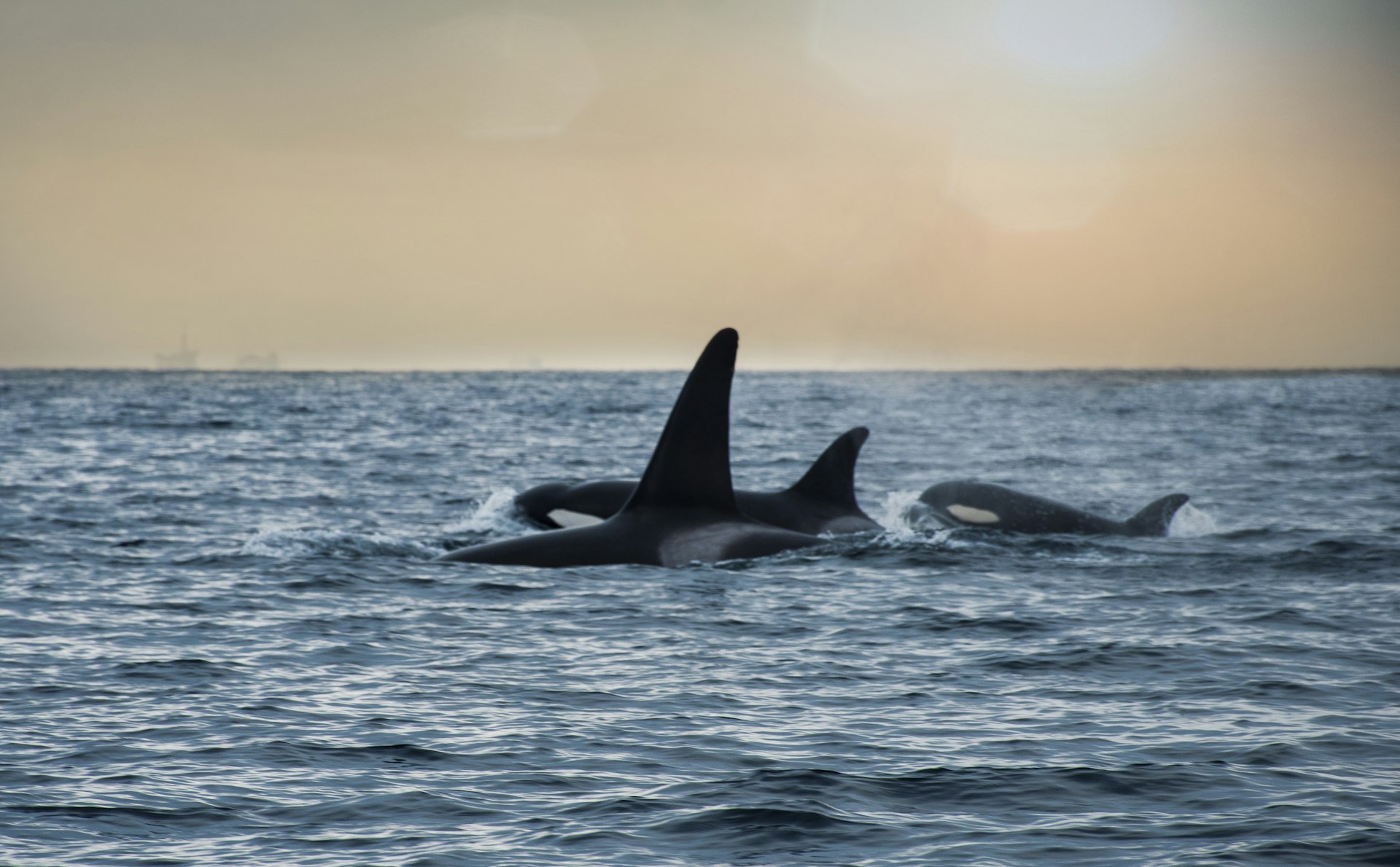
The question we get most from people who are interested in the orcas but nervous about the water is some version of this: how good a swimmer do I need to be? It is a fair thing to ask. If you want to snorkel with orcas in Norway, you will be floating on the surface of a cold fjord, with wild animals that weigh several tons passing below you. Here is what the in-water part really asks of you, and what it does not.
You need to be a confident, calm swimmer, not a fast one. Nobody is asking you to swim laps. What matters is that you are comfortable with your face in the water, breathing through a snorkel, with no bottom beneath you and no wall to hold. If you can float and relax in open water for twenty minutes, you are already close to the level you need. If you panic when you cannot touch the ground, that is worth working on before you go.
In November, the sea in the fjords around Skjervøy and Reinfjord sits at roughly 5 to 7 degrees Celsius. That sounds brutal, and it would be in swim shorts, but you wear a thick drysuit with a hood and gloves, and the suit does a lot of the work for you. It traps air, so you float high on the surface almost without effort. Most of the swimming you do is a gentle kick or simply drifting while the guide positions the group. Our full breakdown of the suit question is in our post on drysuit vs wetsuit for swimming with orcas.
The cold shows up on your face and hands first. Your first minute in the water is a shock, then your breathing settles. Practise breathing slowly through the snorkel in a swimming pool the month before. It sounds silly, but that single habit is what separates people who enjoy the first entry from people who want out.
Orcas in Norway follow the winter herring into the fjords, and the boat crew spends the day locating them. When the animals are feeding calmly and the conditions are right, the crew decides whether swimmers can enter. You get in from the boat in small groups, stay close to the guide, and float quietly. Often the orcas pass below or alongside you, sometimes curious, sometimes ignoring you completely. Many people say the thing they remember most is the sound, the clicks and calls carrying through the water into your hood.
It is also not a long swim. Entries tend to be short, and you climb back onto the boat, warm up and go again if the animals are still around. If you want the safety side in detail, we wrote an honest piece on whether it is safe to swim with orcas in Norway.
You can still come, and you can still be part of the day. On our orca days, guests who prefer to stay dry or who are not confident swimmers stay on the boat as whale watchers. From the deck you are often close enough to see the animals surface, hear them blow and watch them work the herring. Water entry is always optional, and the crew has the final say based on conditions anyway, so a good day is never defined by whether you got in.
If you are somewhere in the middle, comfortable in a pool but unsure in open water, the best preparation is practice, not willpower. Spend a few sessions in a lake or the sea with a mask and snorkel, and try floating on your back and on your front without kicking. Find out how it feels to breathe through a snorkel while someone splashes near you. Tell the expedition leaders honestly where you stand, because they can place you next to a guide and pace your entries.
The orcas are the headline, but they are not the whole trip. Our Norway week runs from Tromsø to a remote fjord camp that you can only reach by boat, then on to the Lyngen Alps for dog sledding and a day with a Sami family and their reindeer. Between sea days there are warm meals, sauna time, and, with some luck and clear skies, northern lights. So even a guest who never gets in the water has a full week.
Be able to float and breathe calmly in open water. Practise with a snorkel and a mask that fits your face. Get used to cold showers or cold swims if you can. Pack warm base layers for under the drysuit, and tell the crew about any medical issue before the first entry. Everything else, the suit, the gear and the briefing, is taken care of on the day.
If this sounds like something you want to try, our Arctic Norway Orca and Lyngen Alps expedition runs 11 to 17 November 2027 with a maximum of eight guests, three orca days on the water and a crew who will match the week to what you are comfortable with. Take a look at the itinerary, and send us a message if you want to talk through your swimming level before deciding.