
WhatsApp

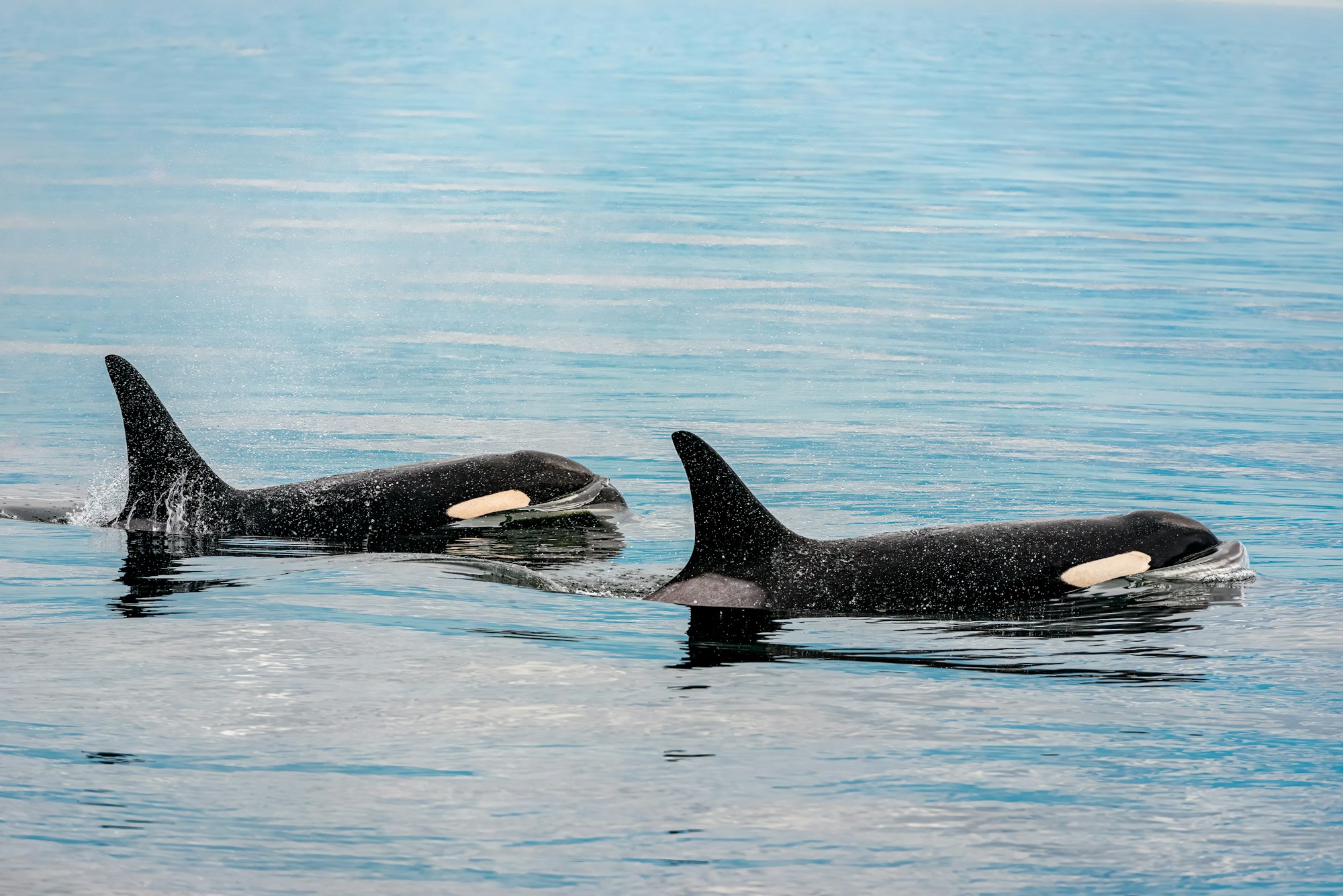
The question comes up on every pre-trip call: drysuit or wetsuit for swimming with orcas in Norway? It sounds like a gear detail. It is not. In 4 to 6 degree water around Skjervoy in November, what you wear decides whether you get 40 minutes of floating beside a feeding pod or 10 minutes of shivering before you climb back into the RIB. Here is how we think about it after a lot of winters in that water.
Sea temperature in the Kvaenangen fjord system in November and early December sits between 4 and 6 degrees Celsius. Air temperature is often lower, and the wind on the back of a moving RIB makes it feel colder still. Daylight is a few hours of blue twilight, so there is no sun to warm you between sessions. You will go in two or three times on a good day, sometimes more if the orcas are carousel feeding close to the boat. The real enemy is not the first dip. It is the fourth, when you are already a little cold and the herring ball is right there.
A drysuit keeps water out entirely. Neck and wrist seals, built-in boots, a waterproof zip, and underneath it you wear whatever insulation you like. That last part is the whole point. In a drysuit you can stack a merino base layer, a fleece or a proper thermal undersuit, thick socks, and stay warm by trapping air rather than fighting water. Most operators in northern Norway, including us, put guests in neoprene drysuits with a 5 mm hood and 5 mm or 7 mm gloves. In that setup, a reasonably fit guest can float for 30 to 40 minutes at a time and go back in after a hot drink on the boat.
Drysuits also solve the problem nobody thinks about: getting out. When you climb back into the boat wet in a wetsuit, the wind chill hits you immediately. In a drysuit you peel off the hood and gloves, pull on a beanie, and you are basically dry. On a long day on the water, that recovery time matters more than anything that happens below the surface.
Some experienced freedivers and underwater photographers bring their own 7 mm open-cell wetsuit, and they have a point. A good two-piece open-cell suit fits like a second skin, moves beautifully, and lets you duck dive without fighting buoyancy. Drysuits are bulky, you float high, and finning in one takes some getting used to. If you shoot video, the mobility is tempting.
The trade-off is heat. A 7 mm open-cell suit in 5 degree water is survivable but not comfortable past 20 or 25 minutes for most people, and once it is wet it stays wet all day. You also need to put it on with soapy water or conditioner, which on a rocking RIB in the dark is its own adventure. We have had guests switch back to a drysuit by day two. We have also had one or two who swore by the wetsuit all week. If you are an experienced cold-water freediver with your own custom suit, bring it. If you are not, do not make the Arctic the place you find out.
This is where most people get it wrong, and it is the part that is entirely in your control. Underneath the suit you want a merino or synthetic base layer, long sleeves and long legs, then a thermal undersuit or thick fleece. Skip cotton completely. Cotton holds moisture and you will sweat on the boat before you get in. Two pairs of wool socks help, since feet are the first thing to go numb in neoprene boots. A thin merino balaclava or beanie under the hood is a small trick that makes a big difference, and thin liner gloves under the neoprene gloves give you another ten minutes of working fingers. Fingers matter if you plan to use a camera.
Your head and hands lose heat faster than anything else, and they are the two things a drysuit does not cover. Go for a 5 mm hood minimum, 7 mm if you run cold. For gloves, 5 mm three-finger mitts are warmer than five-finger gloves and still let you handle a GoPro. Dry gloves that seal onto the suit are the warmest option of all, but they take practice and a trapped air bubble can be awkward on your first day. Fins should be long and soft enough to kick in thick boots. If your mask fogs, it is usually because the hood seal is pushing on the skirt, so sit the hood under the mask strap, not over it.
For almost everyone, the answer is a drysuit, properly layered, with a thick hood and mitts. It is what our guides wear for three days on the water, and it is what lets you stay out long enough to see something, because orcas do not work to your schedule. The short list looks like this: merino base layer, thermal undersuit, two pairs of wool socks, 5 mm hood, three-finger mitts, liner gloves, and a windproof jacket and beanie waiting for you on the boat. Bring the wetsuit only if you already own a thick one and know it fits.
On our Orca and Lyngen Alps expedition we supply the drysuit, hood, gloves and fins, run three full days on the water out of a fjord camp near Skjervoy, and keep the group to eight so nobody waits long for their turn. Dress right and the cold turns into a footnote in the story you tell afterwards.