
WhatsApp

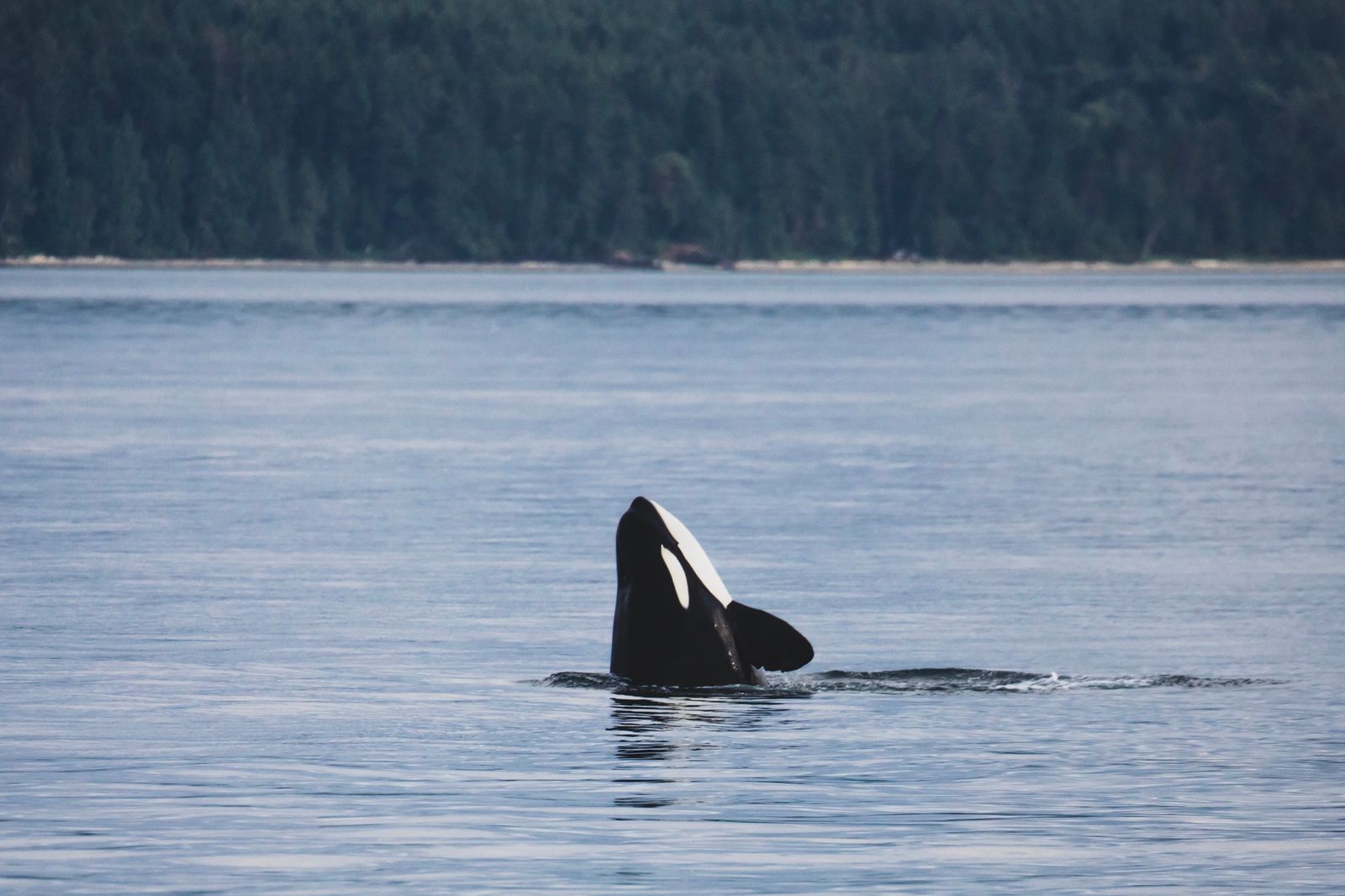
Every winter we get the same question, usually asked half-jokingly over a first coffee in Tromso: is it actually safe to swim with orcas? They are called killer whales, after all. It is a fair question, and it deserves a straight answer rather than a marketing line. So here it is, from someone who spends every November to January in the water around Skjervoy: yes, swimming with orcas in Norway is safe when it is done properly. The animals are not the risk. The Arctic is.
There has never been a recorded fatal attack by a wild orca on a human. Not in Norway, not anywhere. Captive animals in concrete tanks are a different and sadder story, but the wild orcas that follow the herring into the fjords around Skjervoy each winter have been sharing the water with fishermen, divers and snorkelers for decades without a single serious incident. These are precise, social hunters. They eat herring, and a herring is about 30 centimeters long. A human in a drysuit looks nothing like lunch, and orcas do not bite things out of curiosity the way some sharks do.
What you actually see in the water backs this up. Orcas know exactly where you are. A six meter animal will pass within a few meters of you, adjust its course by a fraction, and carry on herding fish. You are a floating log to them, mildly interesting at best.
If anything on this trip deserves your respect, it is the water. Sea temperature in the fjords in November and December sits between 4 and 6 degrees Celsius. That is cold enough to take your breath away, literally, if you jump in unprotected. This is why every serious operator puts guests in proper drysuits with thick hoods and gloves, worn over merino wool base layers and a thermal undersuit. Dressed like that, you can float comfortably for 30 to 40 minutes at a time.
The other real factors are sea state and daylight. In late November the sun barely climbs above the horizon, so encounters happen in a few hours of blue twilight, and the weather can shift fast. A good skipper reads the forecast, keeps the RIB close, and calls people back before anyone gets tired. Cold, fatigue and boat logistics are what guides actually manage all day. The orcas are the easy part.
You do not chase orcas, and you definitely do not jump on top of them. The boat positions itself well ahead of a traveling pod or beside a feeding aggregation, the engine goes into neutral, and you slip in from the side quietly, fins first, no splash. Then you float. Snorkel only, no scuba, because bubbles and noise change the animals' behavior. If the orcas are carousel feeding, herding herring into a tight ball and stunning them with tail slaps, they are focused on the fish and will work around you. Some of the best encounters last two or three minutes. They feel like an hour.
Norway has guidelines for swimming with orcas, and good operators go beyond them. Small groups in the water, usually four to six people with a guide. No touching, no chasing, no free diving down onto animals. One boat per group of animals, never boxing a pod in. Slipping into the water calmly instead of jumping. These rules exist for the orcas' comfort as much as your safety, and they work. Stressed animals leave. Relaxed animals stay, feed, and sometimes come over to look at you. Following the rules is not just ethics, it is how you get the good encounter.
You do not need to be a diver, and you do not need to be an athlete. You do need to be a confident swimmer who can stay calm with your face in dark water while wearing thick gloves. If open water makes you panic, an Arctic fjord in twilight is not the place to find out. It is also physical: climbing in and out of a RIB in a drysuit several times a day takes some mobility. If you can handle a swimming pool and a flight of stairs, you can handle this, but be honest with yourself and your guide.
Pick an operator that runs small groups and employs guides who are in the water with you, not watching from the boat. Ask how many guests they put in the water at once. Ask whether they follow the herring reports from the fishing fleet, because where the herring goes in Skjervoy and the Kvaenangen fjord, the orcas follow within days. And give yourself several days on site. Wildlife does not run on a schedule, and the people who go home disappointed are almost always the ones who booked a single day trip.
Swimming with orcas in Norway is one of the most intense wildlife experiences on the planet, and statistically one of the safer ones, as long as the cold and the sea are managed by people who do this every day. If you want to experience it with a small, hand-picked group, our Orca and Lyngen Alps expedition runs every winter, combining orca swims with northern lights and the Lyngen Alps.