What to Pack for Swimming With Whales in Tonga: A Practical Kit List


Most people pack for Tonga like it is a beach holiday and then spend the week wishing they had brought one or two specific things. A whale swim week is different. You are on a small boat for five or six hours a day, in and out of the water, with salt, sun and wind the whole time. Here is what to pack for swimming with whales in Tonga, based on what our guests actually use on the water around Tongatapu, and what stays in the bag.
The water: how cold is it, and which wetsuit?
In August and September the water around Tongatapu sits at roughly 23 to 24°C. That feels warm for the first ten minutes. By the third drop of the day, after sitting in the wind on deck, most people are glad of neoprene. A 3 mm full suit is the sweet spot. A shorty works for people who run hot, and a 5 mm is only worth it if you get cold easily in a pool.
On our expedition the wetsuit, mask and fins are included, so you do not need to haul your own unless you love your kit. If you do bring a suit, pick something with a smooth outer surface that you can get in and out of quickly. You will be pulling it on and off a dozen times.
- Rash vest or thin long sleeve for under the wetsuit, or on its own on warm afternoons.
- Neoprene socks if your fins rub. Long freediving-style fins are not needed. Short or mid-length fins are easier to manage next to a whale.
- Low-volume mask that already fits you. A leaking mask is the number one thing that ruins a whale encounter. Bring anti-fog or baby shampoo.
On the boat: sun, wind and seasickness
The open water south and west of Tongatapu can roll, especially when the trade winds pick up. Even people who never get seasick sometimes feel it on day one.
- Seasickness tablets or patches, taken before you leave the wharf, not once you feel bad.
- A light windproof jacket. Mornings on deck in a wet suit with 15 knots of wind are colder than you expect.
- Reef-safe sunscreen, a cap and polarised sunglasses. The glare off the water helps you spot blows, but it also tires your eyes fast.
- A quick-dry towel and a dry bag for your phone, snacks and a dry layer.
- A refillable water bottle. We keep water on board, and you drink more than you think.
Camera gear that works for whales
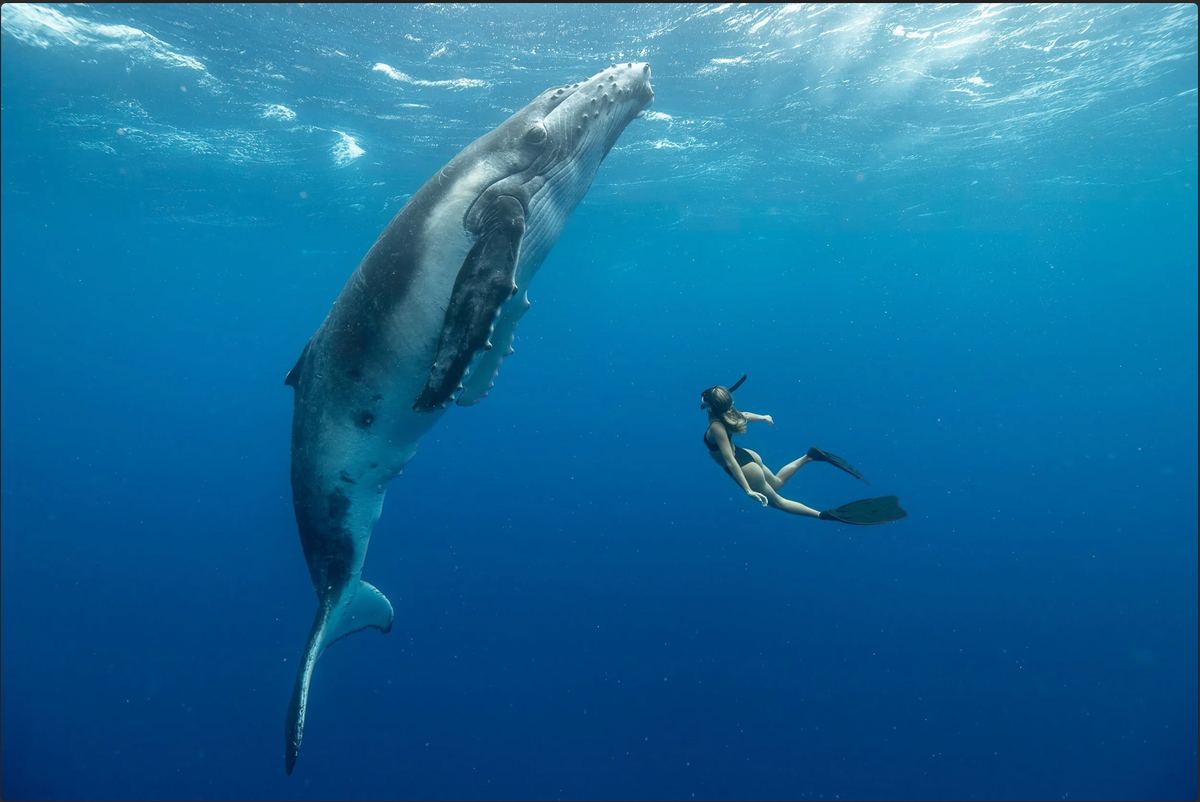
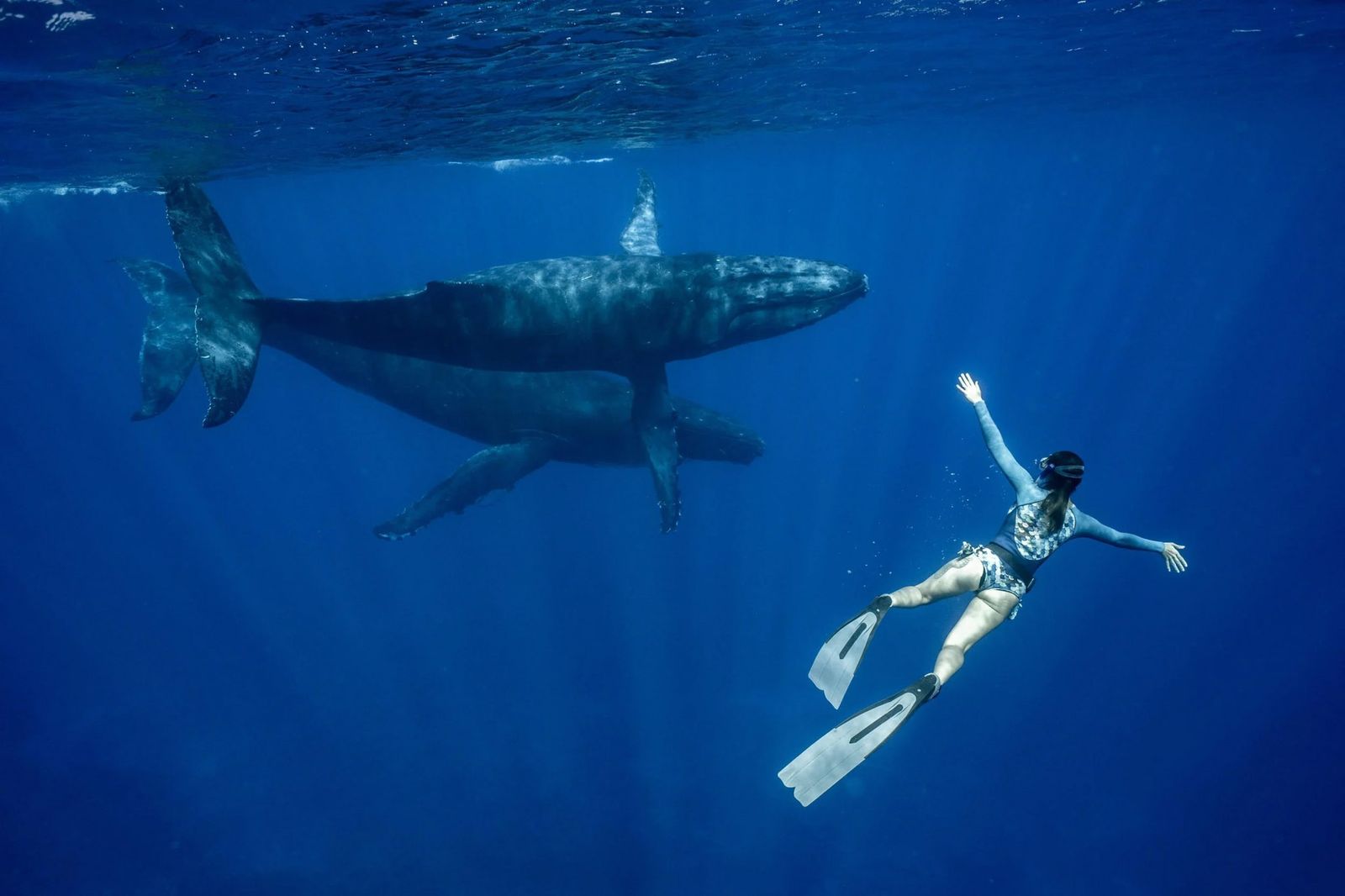
You do not need a full housing to get good shots. Humpbacks are huge and the water is clear, so a wide angle is everything. A GoPro or Insta360 on a short pole or wrist strap covers most of what people want. Shoot in the top metre or two, where the light is best, and keep your camera settings simple so you are watching the whale and not your screen.
Bring spare batteries and a way to charge them on the boat or at night. Tonga uses the same three-pin plugs as Australia and New Zealand, so pack an adapter. We also film and photograph the group every day, so even if your camera fails, you go home with footage. For more on settings, see our guide to photographing humpback whales in Tonga.
On land: Sundays, villages and cash
Tonga keeps Sunday as a day of rest by law. No whale boats go out, most shops close, and it is the day we spend on the island with church singing, caves and a village visit. Pack at least one modest outfit for this: shoulders covered, and a skirt, sarong or trousers below the knee. Swimwear stays at the beach.
- Cash in Tongan pa'anga for small purchases, markets and tips. ATMs exist in Nuku'alofa but card machines are not everywhere.
- Light, breathable clothes and sandals for the evenings.
- A head torch. Power cuts happen and some paths are dark.
- Insect repellent for dusk.
The small things people forget
After a few seasons in Tonga, this is the list of things guests most often ask to borrow: ear drops for swimmer's ear, a basic first aid kit with plasters for fin rubs, lip balm with SPF, a spare mask strap, and a hair tie or buff. Add a printed copy of your travel insurance and passport, and a pen for the arrival card at Fua'amotu airport.
What you can leave at home: weights, a dive computer (this is snorkelling, not scuba), heavy jeans, and anything you would be sad to see covered in salt.
Packing light for a whale week
A carry-on plus one soft bag is plenty for eight days. Most of the week you live in swimwear, a rash vest and a hoodie. If you are combining Tonga with Fiji, the same kit works for both, with a little more reef gear for the Yasawas. Our guide on what a whale swim day looks like shows how the gear gets used through the day.
Swim with the whales with us
Our Whales of Tonga expedition runs 17 to 24 September 2027 from Nuku'alofa, with five whale days on our private boat, a maximum of eight guests, and wetsuit, mask and fins included. Once you are booked we send a short packing note, so you only bring what you need. Applying is free.