
WhatsApp

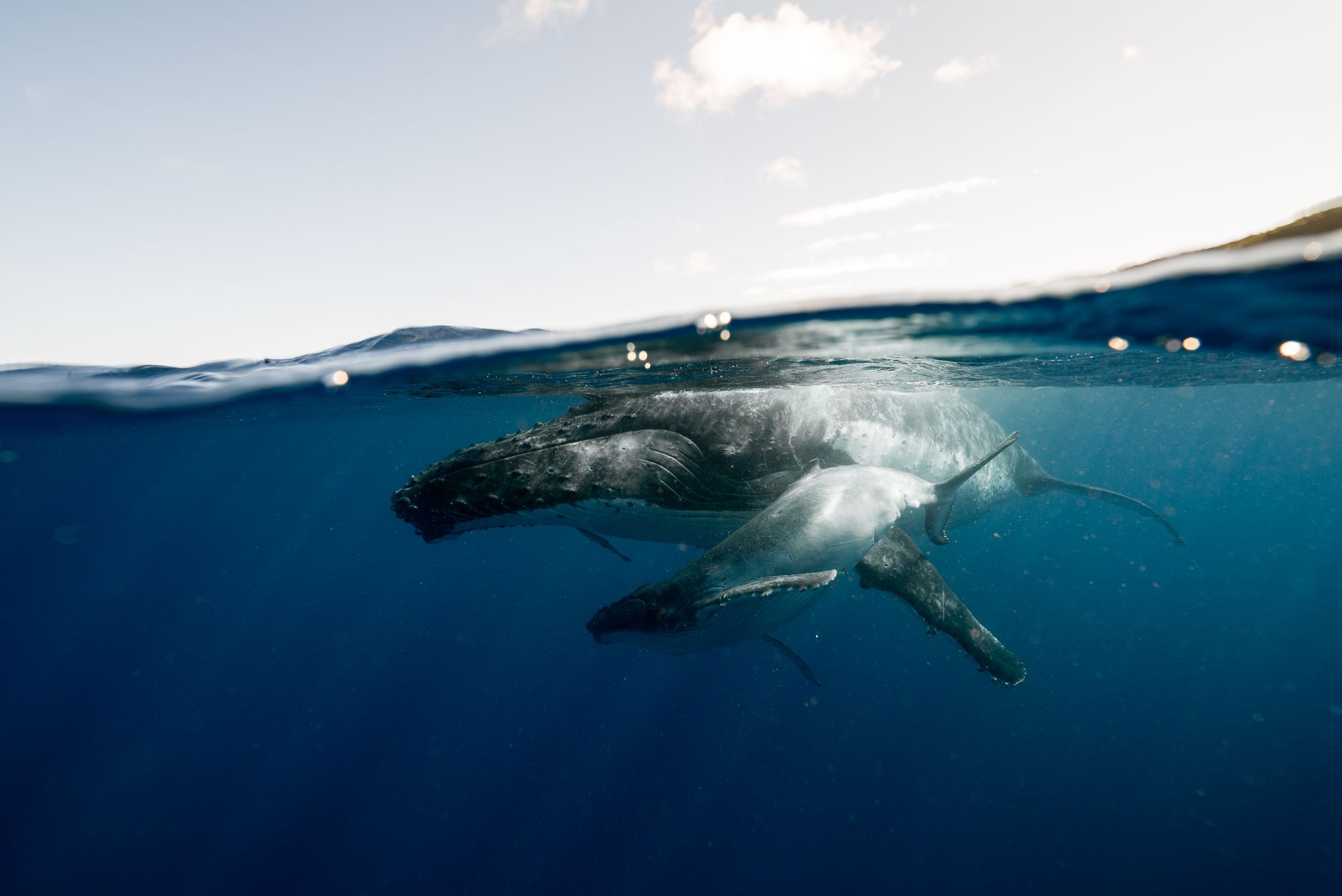
Most people planning a humpback trip to Tonga find the same thing: every search result says Vava'u, a few forum threads say Ha'apai, and almost nobody mentions Tongatapu. Yet all three island groups sit on the same whale migration, follow the same rules, and run the same July to October season. The differences are in boat traffic, logistics and how the days feel. Here is the Vava'u vs Ha'apai vs Tongatapu comparison we wish someone had written for us before our first season.
Every winter, humpbacks swim up from Antarctica to mate and calve in Tonga's warm, sheltered water. They spread across the whole kingdom. Vava'u in the north is the famous one, a drowned valley of deep channels and islands with a yachting harbour at Neiafu. Ha'apai in the middle is low, scattered and quiet, a string of sand islands and reefs. Tongatapu in the south is the main island, home to the capital Nuku'alofa and the international airport, with a long reef edge and deep water right off the west and north coasts. Tongan law allows swimming with whales from licensed boats across all of it, four swimmers in the water with a guide at a time.
Vava'u earned its reputation honestly. The channels between the islands hold a high density of whales, including heat runs where several males chase a female, and the water is deep and clear. The town has restaurants, dive shops and plenty of accommodation. The catch is that it now has somewhere around 30 to 35 licensed whale boats. On a busy September morning you can find yourself queuing behind two other boats for the same mother and calf, with the guide watching the clock as much as the whale. Prices are the highest in Tonga and you need a domestic flight from Tongatapu to get there, which is where a lot of lost luggage stories begin.
Ha'apai is what Vava'u was twenty years ago. A handful of operators share a huge area of sheltered, often very clear water, and the whales here tend to be relaxed because they are not being followed all day. Encounters can be long and calm. The downsides are practical. The season is shorter, roughly mid July to early October. Accommodation is limited and basic, the domestic flights are small and cancel in weather, and when the wind comes up there is not much shelter. If you want the quietest possible whale swim and you are relaxed about logistics, Ha'apai is a strong pick.
Tongatapu is where you land, and that is already its first advantage. No domestic flight, no second airport, no waiting for a Twin Otter to clear the cloud. The whales use the deep water off the north and west coast and the reef edge near 'Eua, and only a small number of boats are licensed here. On most of our whale days we do not see another boat. The encounters are the same species doing the same things as in Vava'u, mothers resting with calves in the shallows, singers hanging head-down in the blue, juveniles coming over to look at you.
What Tongatapu does not have is the postcard scenery of Vava'u's islands or the empty beaches of Ha'apai. It is a working island with a real town. The trade is simple: less tropical drama above the water, far fewer people in it. For a trip where the whole point is the time you spend with whales, we think that trade is worth making, which is why we base our week here.
Vava'u: most operators, most boats on the water, highest prices, domestic flight required, best infrastructure. Ha'apai: fewest boats, lowest day-trip prices, shortest season, domestic flight required, limited places to stay. Tongatapu: few boats, mid-range prices, no domestic flight, longest flexibility on dates since you are already at the international airport. All three run the same rules, four swimmers per whale at a time, snorkel only, no scuba and no freediving down onto animals.
Go to Vava'u if you want a lively town, easy add-on activities and are happy to share whales on busy days. Go to Ha'apai if quiet is everything and you have buffer days for weather. Go to Tongatapu if you want to step off the international flight and be on the water with whales the next morning, with a private boat and nobody else in the frame. Whichever you pick, book at least four or five whale days. Humpbacks do not keep appointments, and the people who go home disappointed are nearly always the ones who booked two.
Our Whales of Tonga expedition runs from Tongatapu every September: eight guests, our own boat, five full days on the water and a Sunday on the island when the boats stay in by law. If you want to add Fiji afterwards, the Yasawa week starts the day after Tonga ends.