
WhatsApp

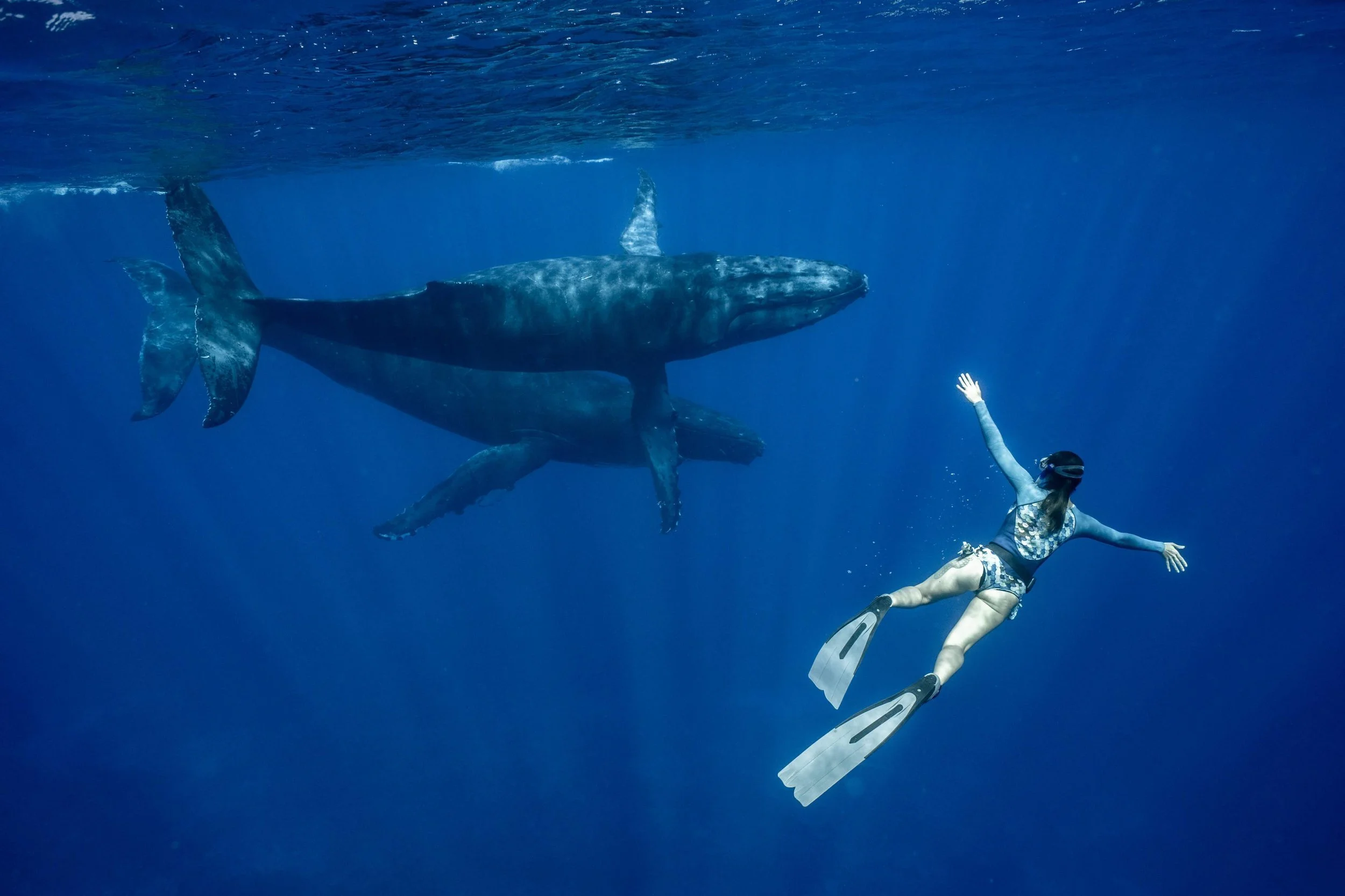
Tonga is one of very few places where you can legally slip into the water next to a humpback whale. Every year the whales come up from Antarctica to mate, give birth and raise their calves in warm, sheltered water, and a small number of licensed operators take swimmers out to meet them.
The whales are the same for everyone. What changes from one operator to the next is the island you are based on, the boat, the guides, the group and how honestly the week is planned. This guide covers the operators worth knowing, what nobody tells you before you book, and the questions that separate a good week from a frustrating one.
Humpbacks are in Tongan waters roughly from July to November. Tonga protected its whales decades ago and now runs some of the strictest whale swim rules anywhere, and those rules decide what your time in the water looks like:
The four-swimmer rule matters most when you compare operators. On a boat with twelve guests, you rotate in groups of four and spend a lot of time watching from the deck. On a smaller boat, you get in more often. Ask every operator how many guests share the boat, not only how many are on the expedition.
Most whale swim operators work out of Vava'u in the north. It is beautiful and it is busy, with dozens of licensed whale boats in season. That means more boats waiting for the same pods and an extra domestic flight to get there.
We chose Tongatapu, the main island, for the Whales of Tonga expedition. There are far fewer whale boats, the whales tend to be calmer around swimmers, and you land at the international airport, so there is no domestic connection to miss. Neither island is wrong. It is simply worth knowing which one you are signing up for and why.
These are established names that come up again and again. Every one of them runs legitimate, licensed whale swims. They differ in format and in who they suit.
Eight days in September on Tongatapu, with five whale days on our own private boat. A maximum of 8 guests, so with the four-swimmer rule you are in the water often. Snorkelling only, no scuba or freediving with the whales. Every guest is hand-picked through a free application and a short video call. Best for travellers who care about the encounter and about who they share the week with.
One of the longest-running operators in Tonga, swimming with whales in Vava'u since 1999. Small groups of up to 8, a resort base and a crew with deep knowledge of humpback behaviour. A solid choice if a long track record is your first criterion.
Led by wildlife photographer Scott Portelli in Vava'u, with groups of up to 6. The focus is in-water photography and respect for the animals. Best for people who are travelling mainly for the images.
A US non-profit with a long history of naturalist-led whale swims in Tonga. Strong on education and conservation. Best for travellers who want the science explained as they go.
Runs 4 and 6-person boats in Vava'u. With a four-person boat, every guest can be in the water at every encounter. Best for those who want the highest possible water time and are less interested in the rest of the week.
A Belgian-led small group of up to 7, with a loyal community of repeat guests and an ocean-sports angle. Best for social travellers who already spend a lot of time in the water.
Humpbacks are wild. A curious calf can stay with you for a long time. A passing adult can be gone in seconds. Good operators are open about this and plan several whale days because encounter quality varies. Be careful with anyone who promises how long you will swim with a whale.
Sundays are out by law, and weather days happen. A well-planned expedition builds that in and fills the gaps with reef snorkelling, the island and good evenings, so a quiet day never feels like a wasted one.
From Europe, plan on more than a day of travel each way, usually through Auckland or Fiji. An eight-day expedition becomes a much longer commitment. That is part of why we based ours where there is no extra domestic flight, and why Tonga pairs well with our Fiji Yasawa expedition if you want to make the long flight count.
Whale days include long stretches of searching and waiting on a small boat. The people around you decide whether those hours are a pleasure or a test of patience. With most operators, booking is first come, first served. You find out who you are with on day one.
Use these questions with any operator you are considering, including us:
We built the Whales of Tonga expedition around the things that frustrated us elsewhere. Eight days, five whale days, our own private boat, Tongatapu instead of Vava'u, and never more than 8 guests. The four-swimmer rule means you get in the water often, and you are with the same small crew all week.
It is snorkelling only. We do not scuba or freedive with the whales, and we do not accept guests who cannot swim comfortably in the ocean. That is a safety rule, not a formality.
Every guest is hand-picked. You apply for free, we have a short video call to make sure the expedition fits you and you fit the group, and a 20% deposit confirms your place. It sounds like a lot of effort for a holiday. In practice it is the reason our groups enjoy the waiting hours as much as the whales.
If photography is your priority, a photographer-led group makes sense. If maximum water time is all that counts, a four-person boat in Vava'u delivers it. If you want conservation explained in depth, a naturalist-led non-profit is a strong fit. If you want a calmer island, a private boat and a small group chosen with care, that is what we do.
The whales will be extraordinary whichever you pick. Choose the week around them deliberately.
If that sounds like your kind of expedition, read the full Whales of Tonga itinerary and send us your application. Applying is free.