
WhatsApp

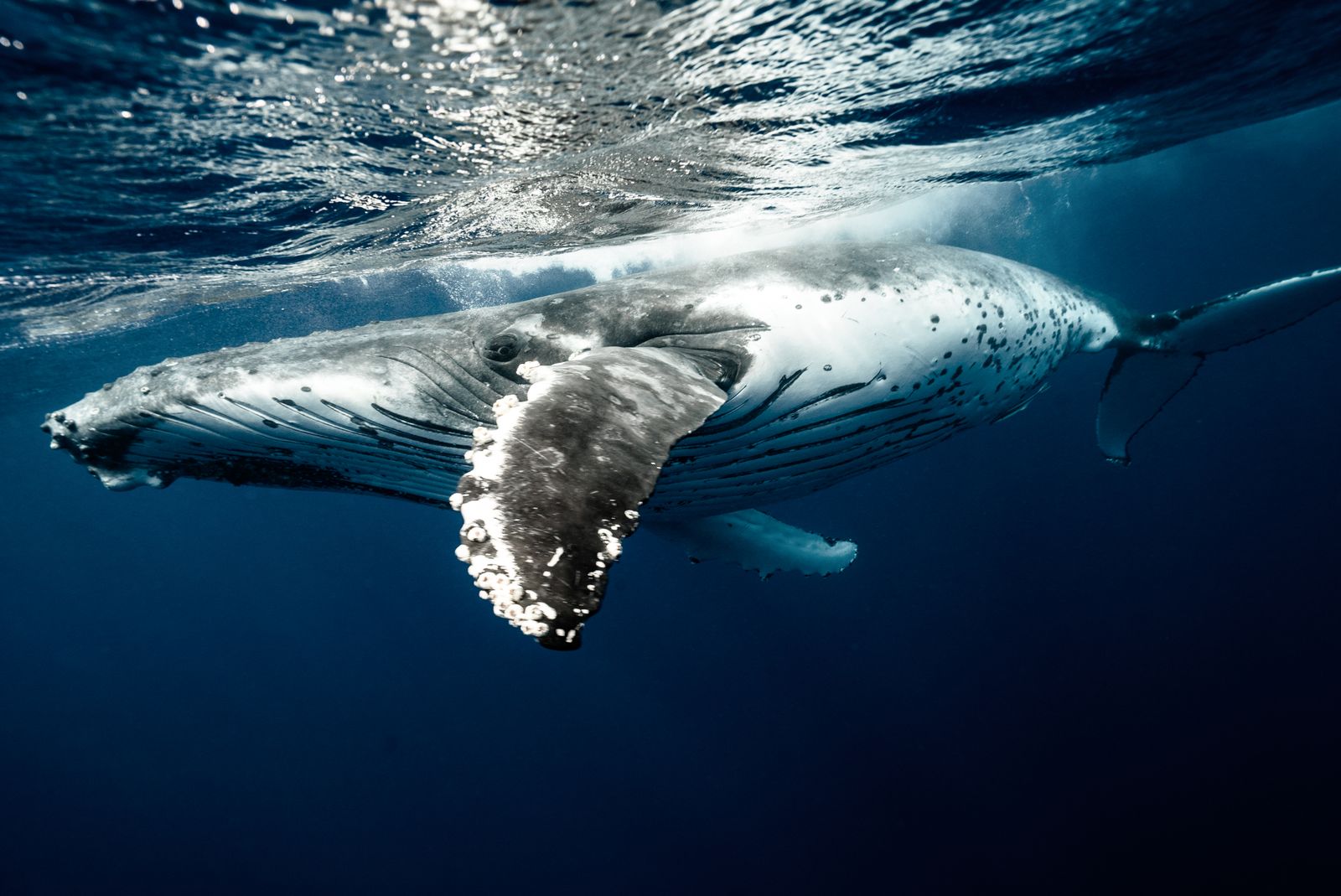
If you have decided to swim with humpback whales, you have probably narrowed it down to the same two names everyone does: Tonga or French Polynesia. Both host South Pacific humpbacks from July to October. Both allow in-water encounters. Both will change how you think about the ocean. But they are very different trips, and picking the wrong one for your style is an expensive mistake. Having guided in Tonga for years and dived across Polynesia, here is our honest comparison.
Humpbacks migrate up from Antarctica to both places to breed, give birth and nurse their calves, roughly July through October with August and September as the sweet spot. The difference is geography. In Tonga, the Vava'u and Ha'apai island groups form a maze of sheltered channels and calm lees where mothers park their calves for weeks. In French Polynesia, most whale swimming happens off Moorea and Tahiti, along the outer reef in open Pacific water. Sheltered nursery versus open ocean: that single difference drives almost everything else.
Tonga gives you 24 to 26 degree water and visibility that ranges from decent to jaw-dropping depending on weather and runoff. French Polynesia runs warmer, 27 to 29 degrees, often with that deep cobalt clarity the outer reef is famous for. Moorea adds supporting cast: spinner dolphins, reef sharks, the occasional manta on the same outing.
Tonga's trump card is encounter quality. Because mothers and calves rest in calm, protected water, you get long, settled encounters: a curious calf circling snorkelers while mum hangs below, singers holding position for an hour, heat runs charging past the boat. In Moorea the whales are often traveling along the reef, so swims can be shorter and more athletic, with more swimming to intercept and less floating while the whale decides it likes you.
Both countries regulate the activity, which is a good thing. In Tonga, whale swimming is licensed, with four guests plus a guide in the water per whale and one boat per encounter. In French Polynesia the rules have tightened recently: one boat per whale sighting and a maximum of six swimmers, with distance rules enforced more strictly each season. On busy August days around Moorea, several boats may still be working the same stretch of reef, waiting their turn. Tonga's remoteness is its crowd control, and it goes further on Tongatapu, where we run our trip: only a handful of licensed whale boats, against more than 35 in Vava'u.
Here French Polynesia wins comfortably. Papeete has direct flights from Los Angeles, San Francisco, Seattle, Paris and Tokyo, and Moorea is a 30 minute ferry from the capital. You can be whale swimming the morning after leaving California. Tonga takes commitment: most travelers route through Auckland, Sydney or Fiji into Nuku'alofa on Tongatapu. Most operators then add a domestic hop to Vava'u; we stay on Tongatapu, where the whales come right past the island. Budget a solid two days of travel from Europe or the Americas. Our guests often soften the journey by combining Tonga with a week in Fiji, which is exactly how we schedule our own expeditions.
Day trips in Moorea run cheaper per outing, and French Polynesia offers everything from budget pensions to overwater villas, so you control the spend. Tonga has limited accommodation and most serious operators sell full weeks with daily boat time, which costs more upfront but buys you five or six consecutive days on the water. For a once-in-a-lifetime encounter, consecutive days matter more than anything else, because whales do not perform on demand and one windy day can wipe out a short itinerary.
Choose French Polynesia if travel time is tight, you want warm cobalt water, resort comfort and a broader holiday with whales as the highlight. Choose Tonga if the whales are the entire point: longer encounters, mother and calf pairs in calm water, fewer boats, and a raw island kingdom that feels wonderfully unpolished. Most of our guests who have done both say the same thing: Moorea was beautiful, Tonga was personal.
If Tonga is calling, our Whales of Tonga expedition runs every September with a small, hand-picked group, and you can pair it with our Fiji week right after. Ten guests, five days with the whales on our own boat, no shortcuts.