
WhatsApp

Baa Atoll sits on the western edge of the Maldives, and the whole atoll is protected as a UNESCO Biosphere Reserve. Hanifaru Bay is the small marine protected area at its heart, and it is one of the richest feeding sites anywhere in the ocean. The bay is tiny, barely the size of a football pitch, but for a few hours on the right day it holds more large marine life than almost anywhere on earth.
Protection matters here. Boat numbers are capped, swimmer numbers are managed by rangers, and the bay closes when conditions are not right. That is a good thing. It keeps the feeding natural and the animals relaxed, which is exactly why the encounters are so good.
The show runs on the moon. Around the full and new moons, strong tidal currents push against the incoming monsoon flow and trap dense clouds of plankton inside the bay. That plankton is the entire reason anything shows up.
When the trap sets, manta rays arrive to feed. On an average day you might share the water with a dozen. On a good day it is fifty or more, and on the very best days the count runs into the hundreds. They loop and barrel-roll through the plankton in slow motion, sometimes stacking into feeding chains that pass within arm's reach.
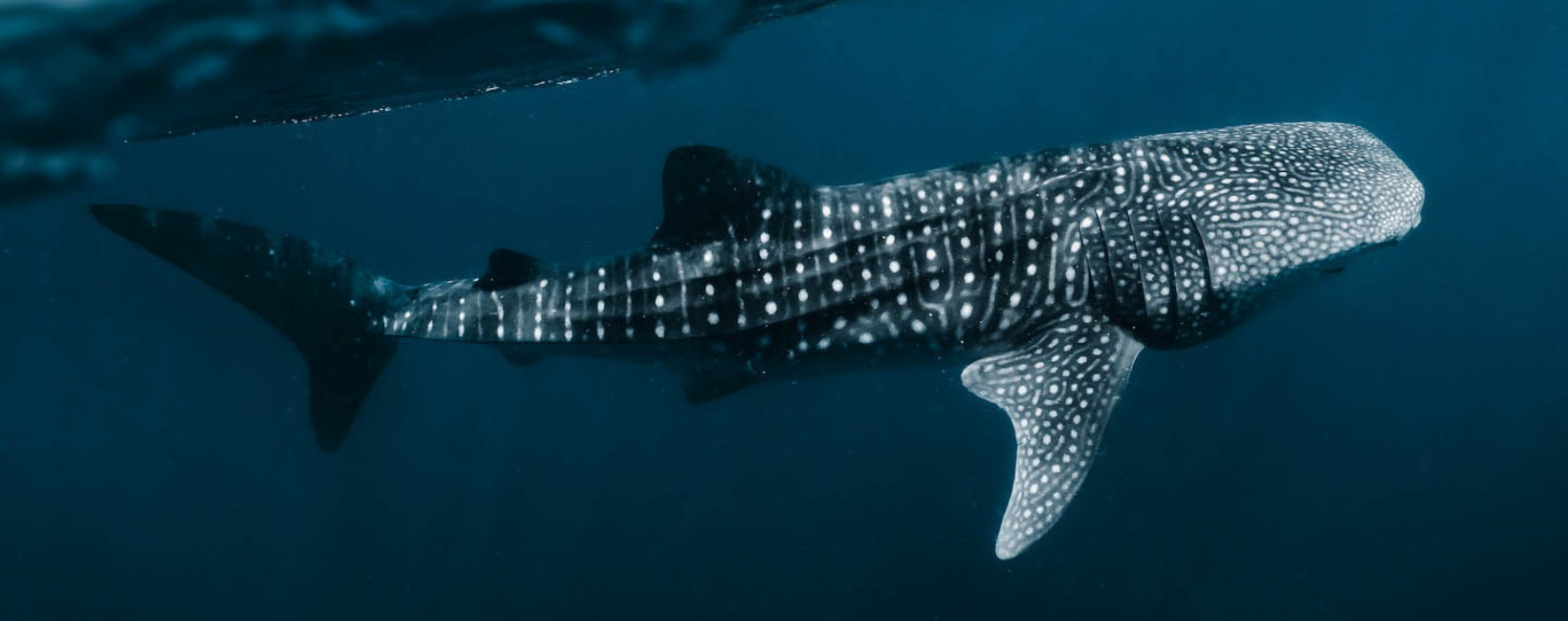
The Maldives is one of the few places on the planet where you can reliably find whale sharks in every month of the year. They cruise the outer edges of the atolls feeding on the same plankton blooms, and Baa Atoll is one of the better places to run into them.
They are filter feeders, completely harmless, and often surprisingly relaxed around calm snorkelers. Seeing a seven metre whale shark glide past in clear water is the kind of thing people remember for the rest of their lives.
Hanifaru is a snorkelling site. No scuba is allowed inside the bay, and there is a good reason for that. Bubbles from dive gear disturb the mantas and break up the feeding. Keeping it to snorkelling only keeps the bay calm and the animals behaving naturally.
It also levels the field. You do not need a dive certification or any real experience. If you can float on the surface and breathe through a snorkel, you can have one of the best wildlife encounters of your life here.
Rangers control access to the bay. Boats wait offshore until a spotter confirms mantas are feeding, then groups drop in for managed rotations so the bay is never crowded. You will often do short, sharp sessions rather than one long swim, getting in when the action is on and resting between.
Because everything hinges on the tide and the plankton, patience is part of the deal. Some days you wait. When the trap sets, it is worth every minute.
The manta season in Baa Atoll runs roughly from June to November, tracking the southwest monsoon. The peak sits in the middle of that window, and the September full moons are about as good as it gets for sheer numbers.
If manta madness is the reason you are going, time your trip to land on or just before a September full moon and give yourself several days of margin. The ocean does not run to a schedule, so the more days you have on the water, the better your odds of hitting the big aggregation.