
WhatsApp

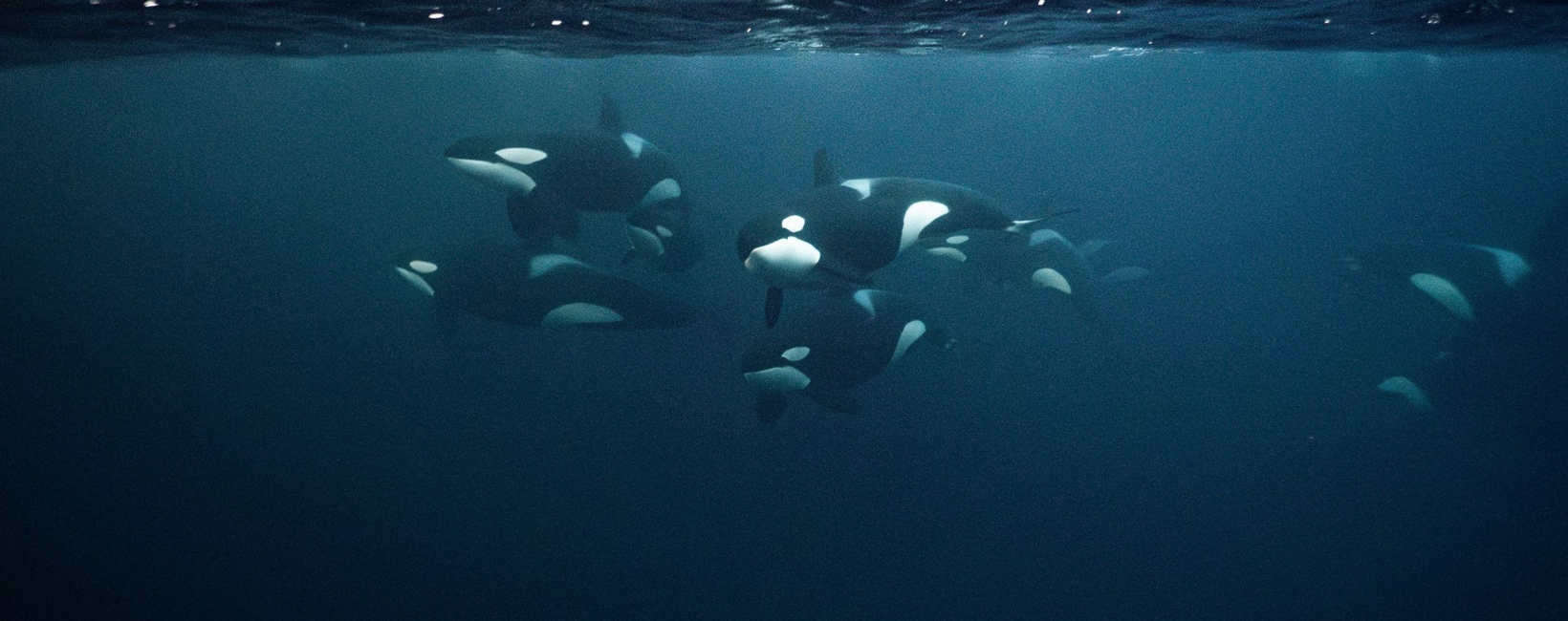
Every winter, vast shoals of Norwegian spring-spawning herring move into the fjords of northern Norway to shelter from the open sea. Where the herring go, the orcas follow. The whole spectacle exists for one reason, and that reason is fish.
This is not a place you visit in summer hoping for a lucky sighting. The animals are here because the food is here, and the food arrives on a seasonal clock. Get the timing right and the fjords can hold hundreds of orcas at once, along with humpback whales that have learned to cash in on the same buffet.
Norwegian orcas hunt with a technique called carousel feeding, and it is one of the most sophisticated hunting strategies in the animal kingdom. Working as a team, they herd herring into a tight, spinning ball and push it toward the surface where the fish have nowhere left to run.
Then they stun. An orca slaps the bait ball with its tail, sending a shockwave through the herring, and picks off the stunned fish one by one. If you are in the water at the right moment, you can watch the whole coordinated hunt unfold beneath you. Humpbacks often crash the party, lunging up through the ball from below.
This far above the Arctic Circle, winter means very short days and very long nights. In the depths of the season the sun barely clears the horizon, and you work in a soft blue twilight for a few hours before the dark returns.
The trade-off is spectacular. Those long dark nights are prime northern lights season, and on a clear evening the aurora can fill the sky above the fjords while orcas breathe in the black water below. It is one of the few places on earth where you can have both in a single day.
The water sits around 4 to 6 degrees, so you swim in a drysuit, not a wetsuit. A drysuit seals at the wrists, neck and ankles and keeps water out entirely, so you stay dry and insulated even after hours on the water.
You do not need to be a strong swimmer, but you do need to be comfortable in cold open water and happy to get in and out repeatedly through the day. Layer well underneath, bring good gloves, and accept that your face and hands will still feel the cold. It is worth it.
The best orca water in Norway is reached from small fishing communities like Skjervoy, well north of the Lofoten islands. These are quiet, working places, not resort towns, and getting there takes some effort.
That remoteness is the whole point. Fewer boats, calmer animals and fjords that feel genuinely wild. You are not queuing for a sighting here. You are sharing quiet water with one of the ocean's top predators doing what it has done every winter for a very long time.
The season runs roughly from late October through January, tracking the herring. November is the sweet spot for many people: the whales are reliably in, and you still get a little daylight to work with. Go deeper into winter and you trade daylight for a better shot at the aurora.
Whichever window you pick, give yourself several days. The ocean and the weather set the schedule, and the more days you have on the water, the better your odds of landing the encounter you came for.