
WhatsApp

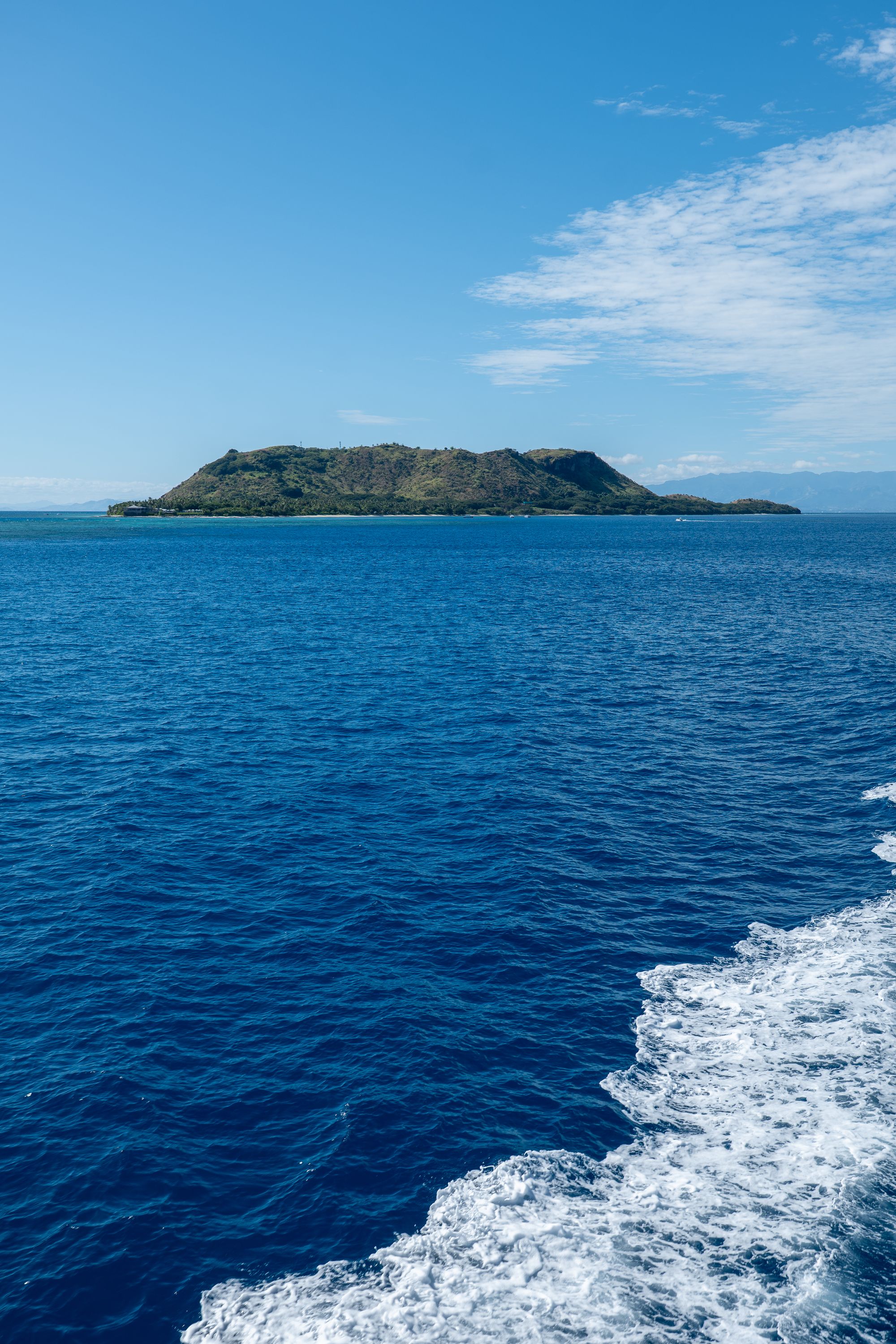
Fly into Nadi and you are an hour by boat from two island chains that look identical on a map and feel completely different once you are there. The Mamanucas start just off the coast. The Yasawas run north from them for another 80 kilometres. Almost every Fiji itinerary ends up choosing one, and the Yasawa vs Mamanuca question is really a question about what you want the week to be: easy and polished, or wilder and further out. Here is how the two compare for people who care about what is under the water.
The Mamanuca Islands sit in a cluster west of Nadi, 20 to 60 minutes by fast catamaran from Port Denarau. Malolo, Mana, Castaway and Tokoriki are the names you will see on resort brochures. The Yasawa Islands begin where the Mamanucas end and stretch north in a long line of volcanic ridges: Kuata, Naviti, Drawaqa, Nacula, Nanuya Lailai and more. The Yasawa Flyer, the yellow catamaran that runs the chain daily, takes two to five hours depending on how far north you go. That transit time is the single biggest practical difference between the two.
Both chains have good coral, and both have patches that got hammered by cyclones and bleaching in the last decade. On balance the Yasawas win for reef condition and variety, mostly because there are fewer boats, fewer day-trippers and more reef per visitor. House reefs off the central and northern Yasawas drop into clear 15 to 25 metre visibility in the dry season, with healthy hard coral, big schools of fusiliers and regular turtles. The Mamanucas have excellent spots too, especially the outer reefs reached by boat from Malolo and Mana, but the snorkeling right off the beach is more hit and miss, and in the inner islands it can be sandy and shallow.
This is where the Yasawas pull clearly ahead. The channel between Drawaqa and Naviti is the most reliable manta ray snorkel in Fiji from May to October, a drift through a plankton-rich passage with reef mantas feeding below you. Off Kuata in the southern Yasawas you can dive with bull sharks on one of the better shark dives in the Pacific, run by a local team that has done it for years. The Mamanucas offer reef sharks on the outer sites and the occasional manta, but nothing you can plan a week around. If a specific animal is the reason you are coming to Fiji, you are coming to the Yasawas.
The Mamanucas are built for a classic resort holiday: pools, kids clubs, cocktail lists, day spas, and a short hop back to the airport. If you have small children or three days to spend, that is hard to beat. The Yasawas range from backpacker dorms to a few quietly excellent boutique stays, often family-run and connected to a village. Meals are set, Wi-Fi is thin, and evenings are kava on a mat rather than a bar. Some people find that limiting. Others find it is exactly the reset they flew across the world for.
The Yasawas are home to around 20 villages, and most stays sit on land leased from the village next door. That means a sevusevu kava welcome, church singing on Sunday, kids waving at every boat, and a feeling that you are a guest rather than a customer. The Mamanucas have villages too, notably on Malolo and Yanuya, but the resorts are more self-contained, and the cultural contact tends to be a scheduled village tour rather than daily life.
Both chains share Fiji's seasons: dry and settled from May to October, wetter and warmer from November to April. For mantas, reef clarity and calm boat days, the dry season is the one to book. The Yasawas are more exposed when the trade winds blow hard, which can make the Flyer crossing lively, so pack seasickness tablets if you are sensitive.
Choose the Mamanucas for a short, easy, polished island break close to Nadi. Choose the Yasawas if you want healthier reefs, the manta channel, the bull shark dive, real village life, and a chain of islands you can actually travel through rather than sit on. For a wildlife-first week, we have never found a reason to pick the Mamanucas.
That is why our Yasawa Paradise expedition rides the Flyer deep into the north and hops back down the chain over seven days: the Blue Lagoon, the Sawa-i-Lau caves, the manta channel, a village kava night, and the Kuata bull sharks to finish. It starts the day after our Tonga whale week, so the two fit on one long-haul flight.