Tonga Whale Swim Rules: What the Regulations Mean Once You're in the Water

Tonga is one of the very few places where you can legally get in the water with humpback whales, and it has been regulating those swims since the 1990s. The rules shape everything about your day: how many people get in, how close you get and how long you stay. Most travellers only hear about them once they are on the boat. Here are the Tonga whale swim rules explained in plain terms, and what they mean for you in the water.
Only licensed operators can put you in
The first of the Tonga whale swim rules is the simplest. You cannot hire a boat and jump in on your own. Swimming with whales in Tonga is only allowed with a licensed whale swim operator, and every group in the water has a licensed guide with it. The guide reads the whale's behaviour, places the group and decides when to get in and when to get out. The skipper has the final say on whether a swim happens at all. If a mother is restless or a whale is travelling fast, the answer is no, and that is the system working.
Four swimmers, a guide and one boat per pod
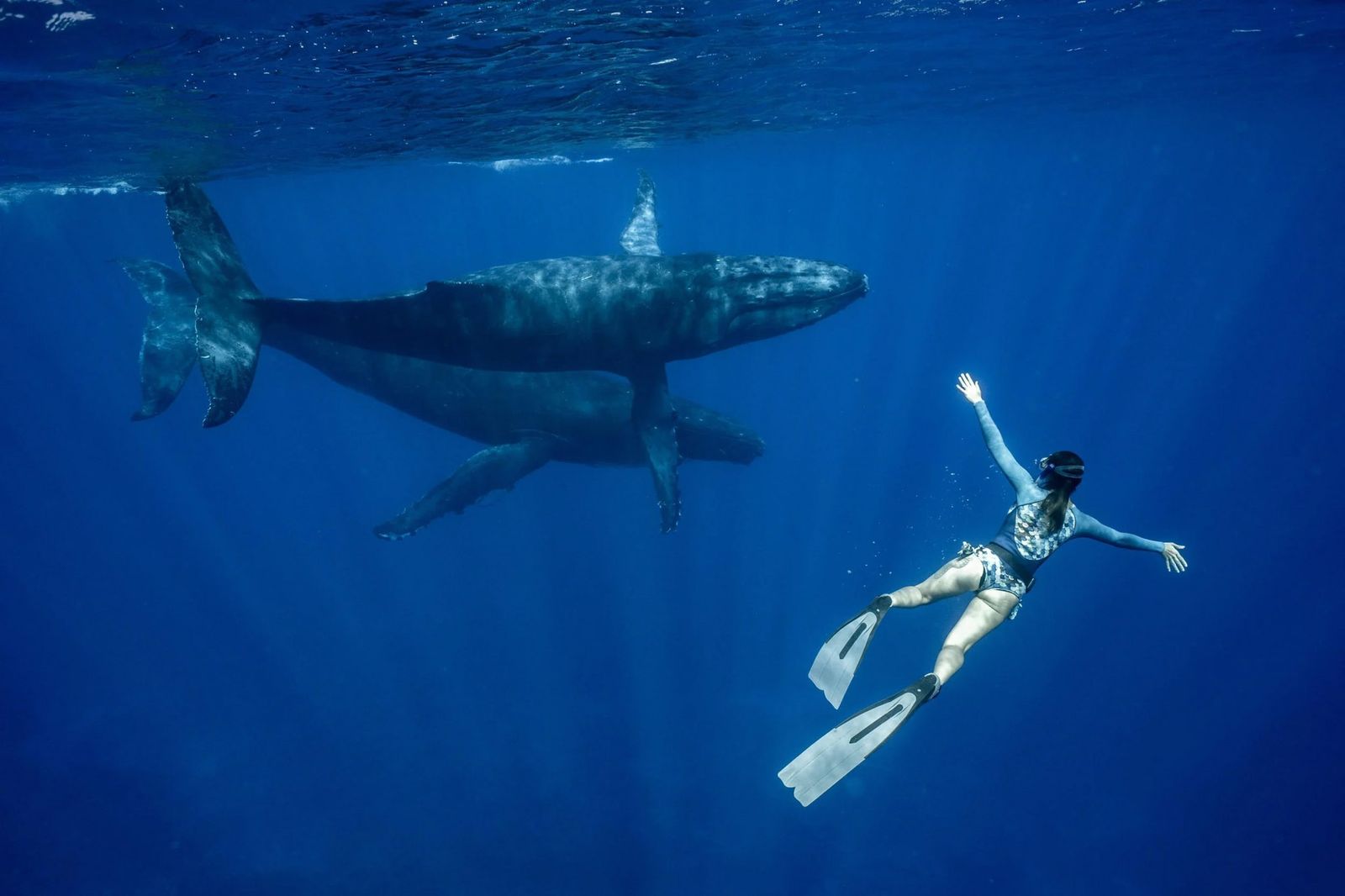
The best-known rule is the group size. A maximum of four swimmers can be in the water with a guide at any one time. On a boat with eight or ten guests, that means you take turns in small groups. It sounds slow, but it is the reason Tongan whale swims feel calm. Four quiet people at the surface are a very different thing to a whale than twenty kicking snorkellers.
Only one operator works a whale or group of whales at a time. Other boats wait their turn at a distance. Operators also work within time limits for each encounter, with a rest period before the next group of swimmers goes in, and a cap on total hours on the water per day. Oceanic Society, for example, cites 90 minutes per encounter followed by a one-hour break. The exact figures are set by the Tongan authorities and can change, so ask your operator how they run it.
Distances in the water
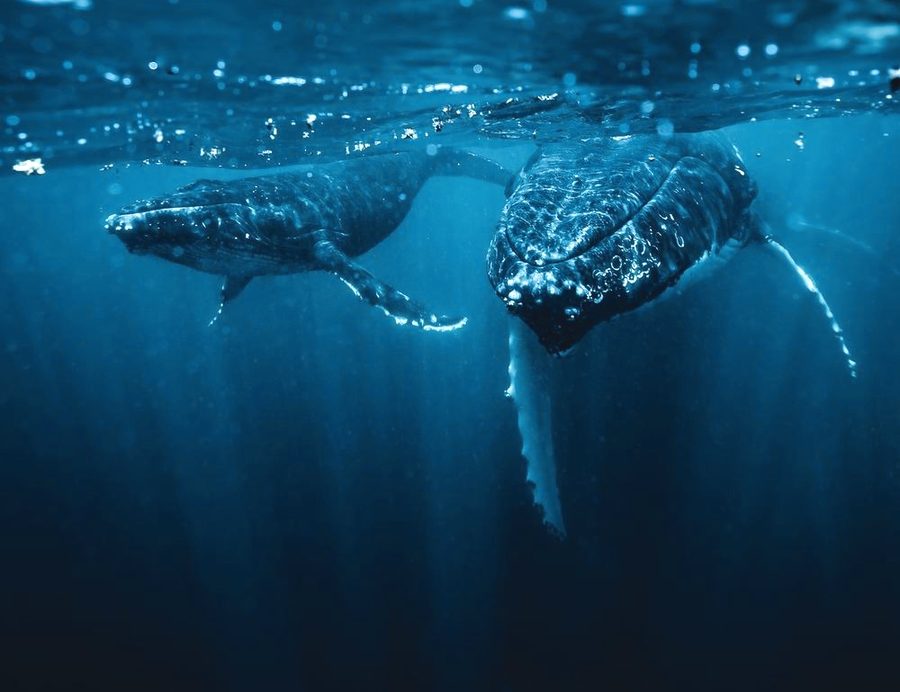
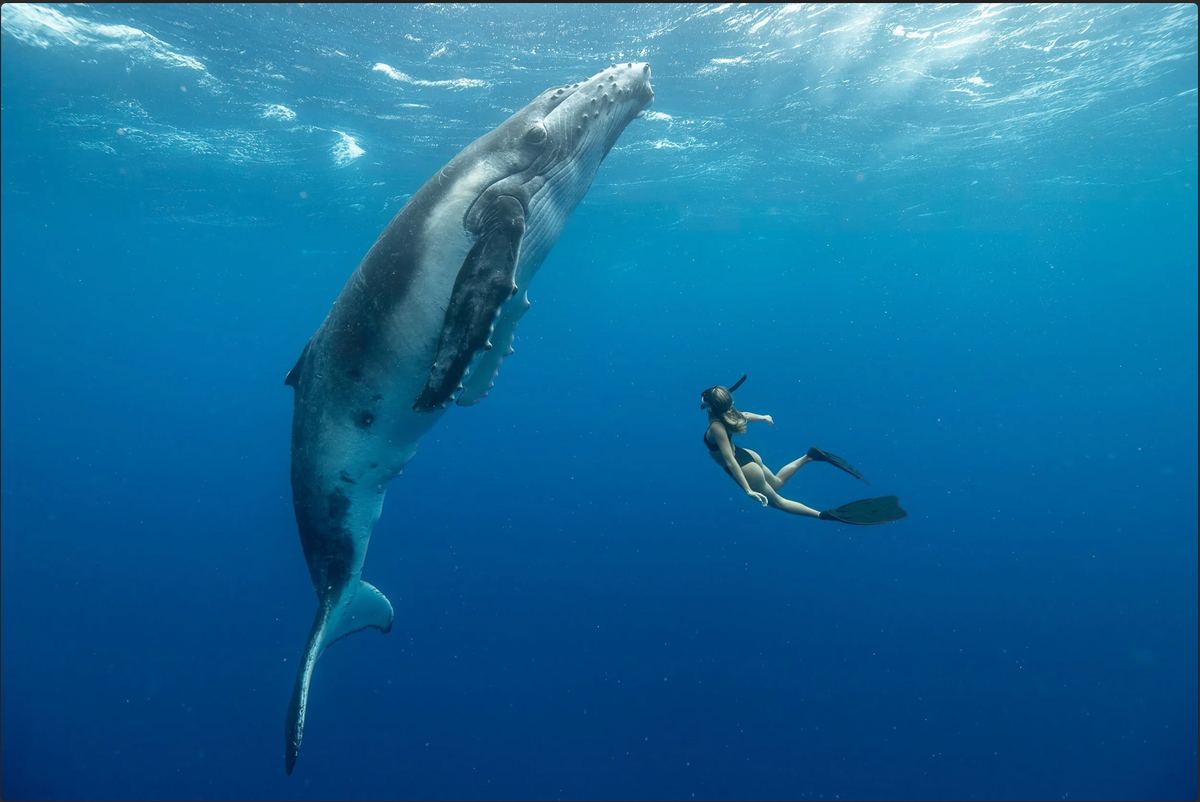
Swimmers keep at least 5 metres from a whale. Boats dropping off or picking up swimmers stay at least 10 metres away, except in an emergency. In practice the whale often sets the distance itself. Mothers usually rest a few metres below the surface while the calf comes up to breathe and look around. You float still, and if the calf is curious, it comes to you.
A few habits help:
- Slide in quietly from the side of the boat. No jumping or splashing.
- Keep your fins below the surface and your arms by your side.
- Do not dive down towards a mother and calf. Stay at the surface and let them choose.
- Follow the guide's hand signals, especially the one that means back to the boat.
What is not allowed
Scuba diving with whales is banned. So are artificial lights, including video lights and flash, and loud or disturbing noise near the animals. Touching a whale is off limits, however close a calf comes. Snorkel, mask, fins and a camera are all you need. For a sense of how it feels to share the water with a 40 tonne animal, read is swimming with humpback whales safe.
No swimming on Sundays
Sunday is a day of rest in Tonga, written into the constitution, and no water activities take place. Under the Tonga whale swim rules, the whales get a full day off every week. Boats stay tied up and most shops are shut. Plan a slow day: church singing in the morning, a long lunch and a walk. If you are flying in, remember airports are also quiet on Sundays.
When the season runs
Humpbacks arrive in Tongan waters from late June and stay into October, sometimes November. August and September are the strongest months, with many mothers and young calves close to shore. Our best time to swim with humpback whales in Tonga guide breaks it down by month, and what a whale swim day looks like walks you through the hours on the boat.
Swim with us on Tongatapu
Our guides work within the Tonga whale swim rules every day of the season and brief you on them before your first drop. Our Whales of Tonga expedition runs 17 to 24 September 2027 on Tongatapu, with licensed local guides, small swim groups and plenty of time on the water during the calving season. You can combine it with our Fiji Yasawa trip the week after. Applying is free.