Dog Sledding in the Lyngen Alps: What to Expect on a Husky Day From Tromsø

Most people come to northern Norway in winter for the orcas or the northern lights. Then they spend a day behind a team of huskies in the Lyngen Alps and it ends up being the part of the trip they talk about most. If you are thinking about dog sledding in the Lyngen Alps, here is what the day actually involves, from the kennel to the trail, and how to dress for it.
Why the Lyngen Alps
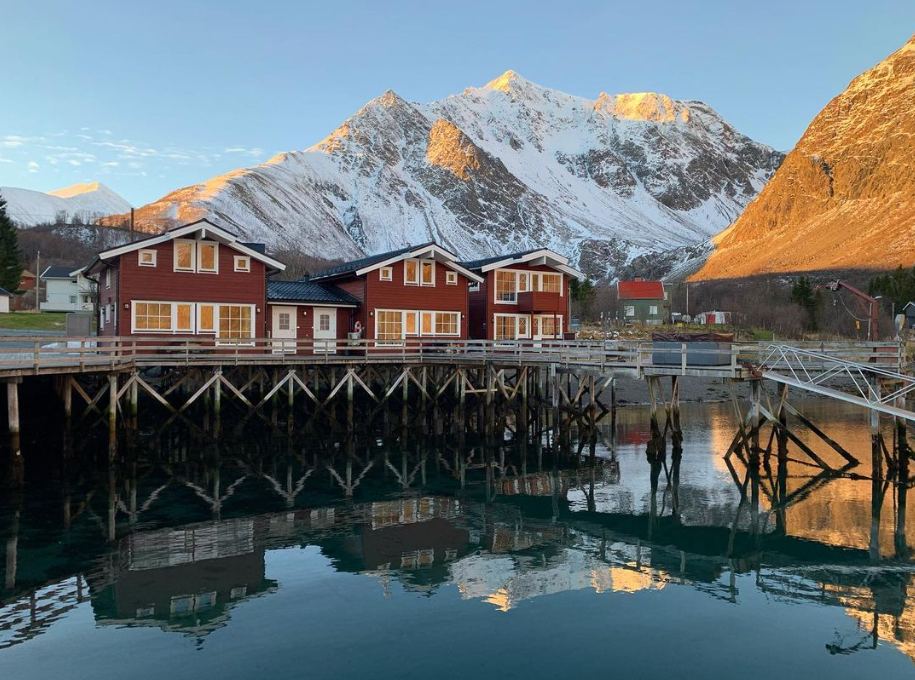
The Lyngen Alps run along a peninsula east of Tromsø, with sharp peaks rising straight out of the fjords to over 1,800 metres. The valleys on the inland side, around Skibotn and the end of Lyngenfjord, sit in a drier, colder pocket than the coast, which means snow tends to arrive earlier and stay better. That is why several kennels base themselves there instead of right next to Tromsø.
The result is a trail through birch forest and open valley floor, with white mountains on every side. Even in the short days of November, the light on those peaks is something else.
How a husky day works
The day starts at the kennel, which usually means a few hundred very loud, very excited dogs. Sled dogs here are mostly Alaskan huskies: smaller and leaner than the fluffy Siberians in photos, bred for running, and impossible not to like.
- Briefing: the musher explains how the sled works, how to brake and what to do if you tip over. It takes about 15 minutes.
- Pairs: two people share a sled. One sits in the basket, one stands on the runners and drives. You swap halfway.
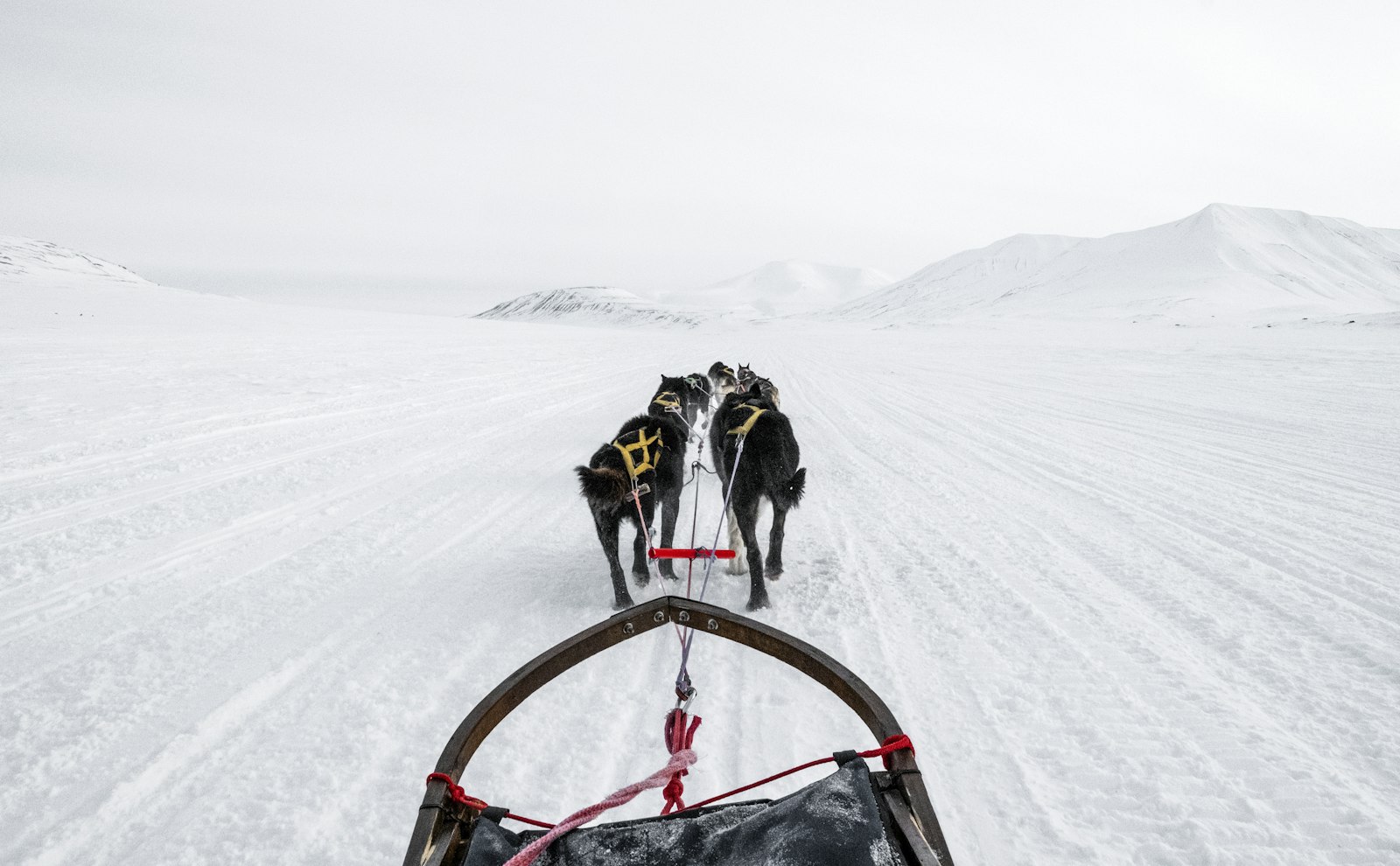
- The team: each sled has a team of four to six dogs. The lead dog follows the sled in front, so you are not navigating.
- The run: usually one to two hours on the trail, with a stop to swap drivers and take photos.
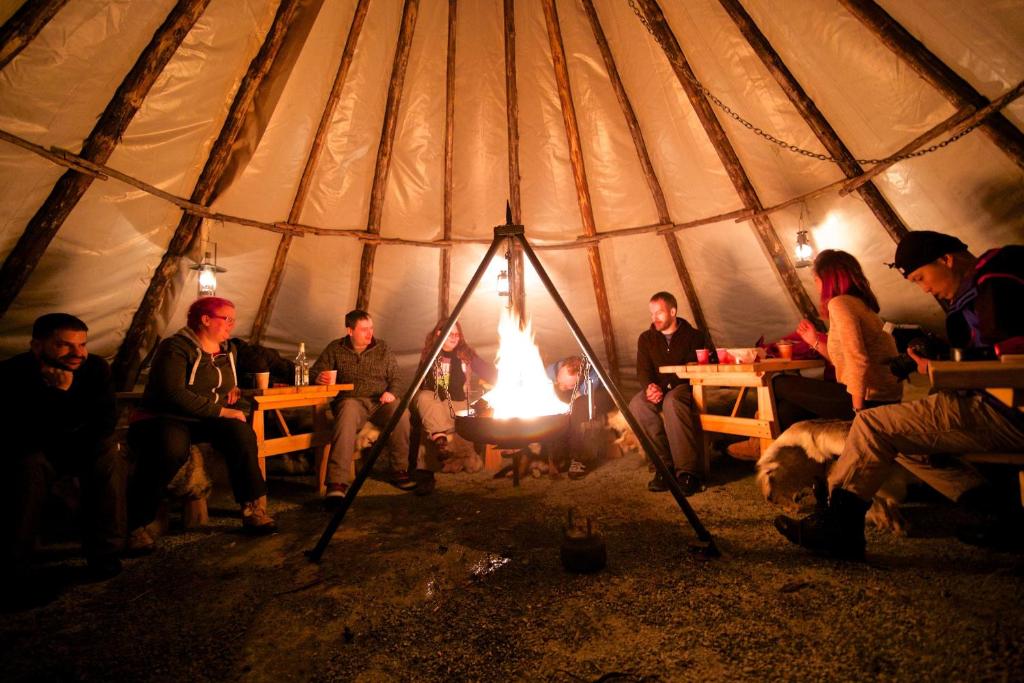
- After: time to meet the dogs properly, often with a hot drink and a meal in a lavvu, the traditional Sámi tent, by the fire.
Driving the sled
You do not need any experience. The dogs know the trail far better than you do. Your job as driver is mostly to keep your weight balanced, help on uphill sections by pushing off with one foot, and use the brake on downhills and corners so the sled does not run into the dogs.
The one rule every musher repeats: never let go of the sled. If you fall off, the dogs will keep running happily without you. Hold on, put both feet on the brake and the team stops. Beyond that, it is surprisingly easy and very quiet once the dogs settle into their rhythm. You just hear the runners on the snow.
What to wear in November
In November the Lyngen valleys usually sit somewhere between -2 and -12°C, and on a moving sled the wind chill makes it feel colder. Most kennels lend thermal overalls, boots and mittens, but what you wear underneath decides whether you enjoy it.
- Wool base layer, top and bottom. Not cotton.
- Mid layer: a fleece or thin down jacket.
- Two pairs of socks, a thin liner and a thick wool pair.
- Thin gloves under the mittens, so you can take photos without freezing your fingers.
- Buff or balaclava and a warm hat.
- Hand warmers and a phone in an inside pocket, since cold kills batteries fast.
The same layering system works for the orca days, so you are not packing twice. Our guide on drysuits and wetsuits for the orca swims covers the water side.
Daylight and the northern lights
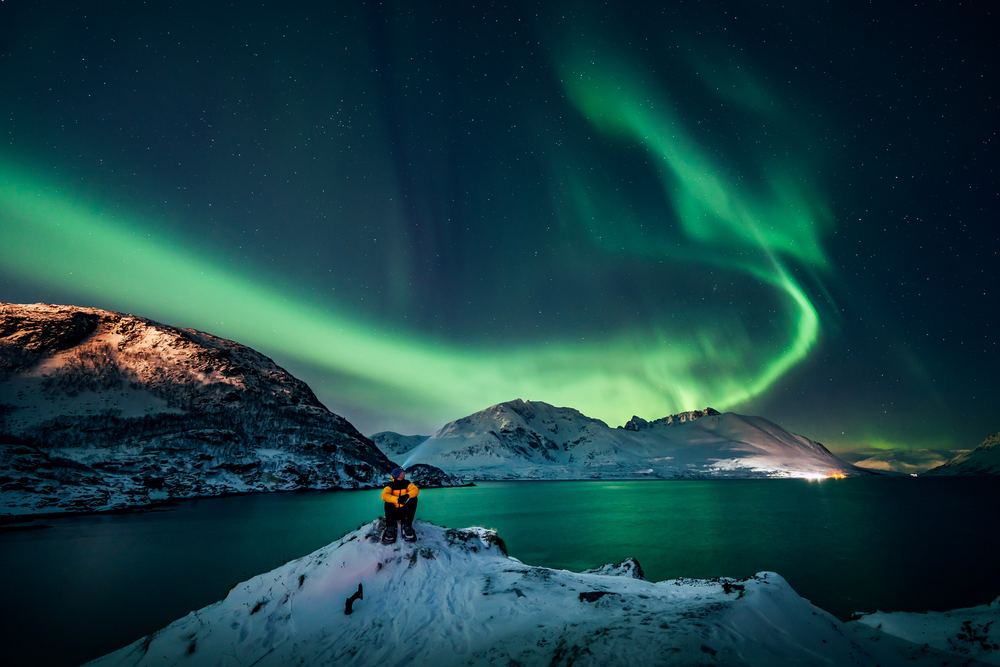
By mid November the sun barely rises in this part of Norway, and the polar night begins in Tromsø towards the end of the month. That sounds bleak but it is the opposite. You get a long blue twilight around midday, with pink and orange on the peaks, which is exactly when a sled run happens. Because the valleys are far from city lights, the evening after a husky day is one of the best chances of the week to see the aurora. For more on the season, read our guide to Tromsø in November.
Is it kind to the dogs?
A fair question. Good kennels treat their dogs as athletes: they are fed, rested, checked by vets, and only run in conditions that suit them. They clearly love running, and you can see it in how they scream to be picked for a team. Look for kennels that let you visit the dog yard, keep retired dogs, and limit how many runs each team does per day.
Sled through the Lyngen Alps with us
On our Orca & Lyngen Alps expedition, the husky day comes after three days with orcas and humpbacks, followed by a day with a Sámi reindeer family. It runs 11 to 17 November and 18 to 24 November 2027 from Tromsø, with a maximum of eight guests and all transfers included. The last spots are going, and applying is free.