
WhatsApp

Indonesia has two dive destinations that end up on every bucket list, and most divers only have the budget and the leave for one of them per year. So the Raja Ampat vs Komodo question is a real one, and the usual answer, that both are amazing, does not help you book a flight. Here is the version with specifics, from people who run a liveaboard week in Raja Ampat and have spent plenty of time hanging on to rocks in Komodo.
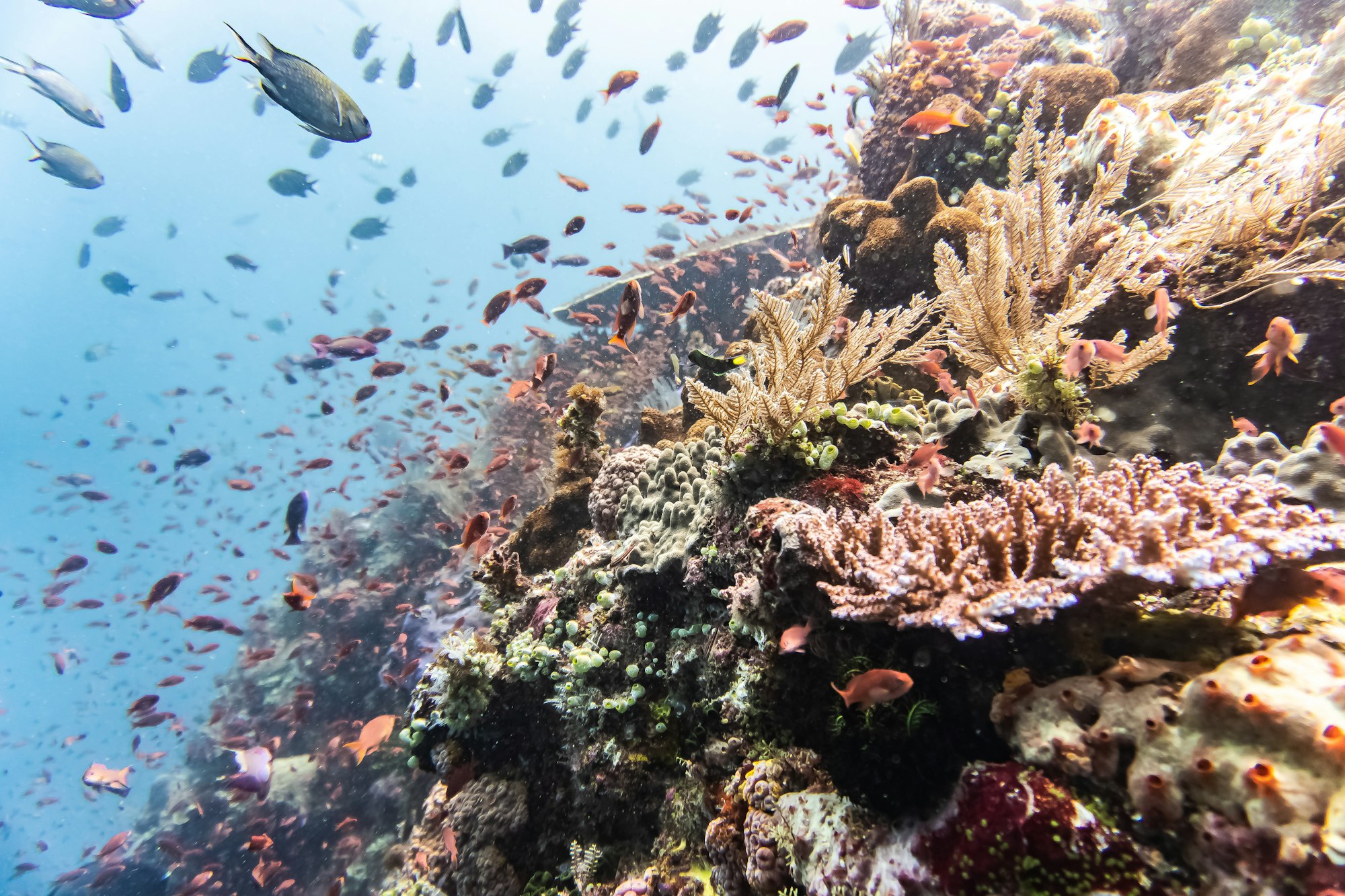
Raja Ampat, off the western tip of Papua, is the most biodiverse reef system on Earth. Surveys have counted more than 1,500 fish species and around 550 species of coral in the area, which is roughly three quarters of all the coral species that exist. Dives here are about density: reefs so packed with soft coral, sea fans and fish that you cannot see the rock underneath. Komodo, in the middle of the archipelago between Sumbawa and Flores, is about movement. Cold, nutrient-rich water pushes through narrow straits between the islands, and the currents bring in mantas, sharks, big schools of trevally and the kind of dives where the briefing includes the words reef hook.
If you want to see as many different things as possible on a single dive, Raja Ampat wins and it is not close. Pygmy seahorses, wobbegong sharks lying under ledges, walking sharks at night, manta cleaning stations at sites like Manta Sandy, and schooling fish on almost every reef. Komodo delivers bigger moments but fewer of them: mantas at Manta Point and Karang Makassar in numbers, grey and white-tip reef sharks hunting in the current at Castle Rock and Batu Bolong, and the occasional hammerhead or mola in the cooler southern sites. For macro lovers, Raja Ampat. For adrenaline and big animals in current, Komodo.
Raja Ampat has current, sometimes strong at sites like Cape Kri and Blue Magic, but most dives can be planned around the tide and many sites are gentle. A newly certified diver with a good guide can enjoy most of a Raja Ampat itinerary. Komodo is more demanding. The signature sites are drift dives in strong, sometimes unpredictable flow, with down-currents in the south, and operators will often ask for an Advanced certification and a minimum number of logged dives. If you are a nervous or brand-new diver, Raja Ampat is the kinder introduction.
Raja Ampat stays warm all year, 27 to 30 degrees, and the main season runs October to April when the seas are calmest. Komodo is split: the northern sites are 27 to 29 degrees, while the southern sites can drop to 22 or lower because of upwelling. You will want a 5 mm suit in the south. Komodo's dry season is April to November, so if you are planning a northern hemisphere winter trip, the calendar points you to Raja Ampat.
Komodo is easier. Fly to Labuan Bajo from Bali or Jakarta in about an hour, and you can dive from day boats or a short liveaboard. Raja Ampat means flying to Sorong, usually via Jakarta or Makassar, often overnight, then a ferry or a boat transfer to the islands. The liveaboards are longer, typically 8 to 12 nights, and the whole trip costs more, both in time and money. Komodo can be done in four days from Bali. Raja Ampat deserves ten.
In Komodo you can genuinely do either. Labuan Bajo has dozens of dive shops running day trips, and liveaboards range from a couple of nights to a week. In Raja Ampat, a liveaboard is the way to see the real spread, from the Dampier Strait up to Wayag and across to Misool, because the distances between the best sites are large and the resorts, while lovely, each cover a small patch. Sleeping on a traditional pinisi anchored in a lagoon, with nothing but karst islands and birds, is also a large part of why people come back.
Book Komodo if you are an experienced diver with limited time, you like current, and the dragons on land appeal to you. Book Raja Ampat if you want the richest reefs you will ever see, you have ten days, you are happy on a boat, and you would rather be overwhelmed by variety than by adrenaline. Plenty of divers do Komodo first and Raja Ampat a few years later. Few do it the other way round and feel the same about Komodo afterwards.
If Raja Ampat is the one, our Sail and Dive Raja Ampat expedition spends ten days aboard a traditional pinisi in November, with 33 or more dives, beach barbecues, a hike up the Wayag viewpoint and a group of eight. Beginners are welcome, and we build the dive plan around who is actually on board.