WhatsApp

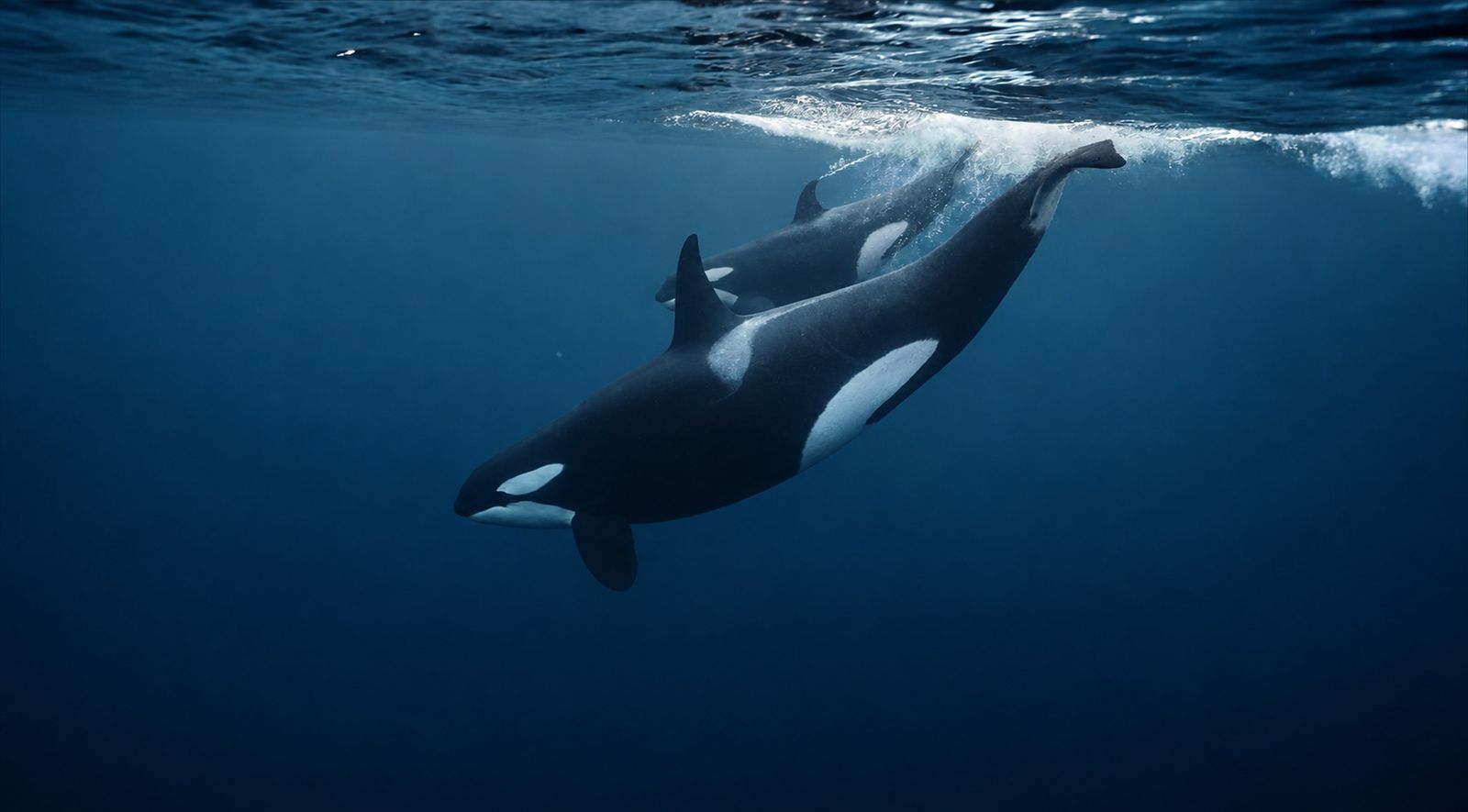
You slide off the boat into water somewhere between 4 and 8°C. Below you the fjord drops into darkness. Then there is movement, a shape, and another, as a pod of orcas moves through the herring cloud, curious, enormous and completely indifferent to you in the best possible way.
Every winter the fjords around Tromsø, Skjervøy and Alta host one of the most concentrated orca gatherings on earth. The whales follow huge schools of Norwegian spring-spawning herring into shallow water, and feeding events can involve hundreds of orcas and humpbacks at once, often under the northern lights.
The encounter itself is extraordinary whoever you go with. What separates a good orca tour from a great one is everything around it. Here is what to look at, how the main in-water operators compare, and which questions to ask before you pay anyone.
Some operators offer viewing from a boat only. Others let you get in the water with the orcas when conditions and whale behaviour allow. That one difference changes the whole experience.
Ask directly:
The last question matters more than people think. Arctic fjords are open water with current and cold. A good operator only takes confident swimmers in and is happy to keep everyone on the boat when it is not right. We do not accept guests who cannot swim comfortably in the ocean.
It also helps to know what the swim itself looks like. You do not dive down or chase anything. You float quietly at the surface and let the orcas decide how close they want to come. Some passes last seconds, some pods stay around for a long time. An operator who explains this honestly up front is usually one who runs the water side well.
Most orca tours run with 8 to 18 guests. Smaller groups mean more flexibility, more time in the water for each person and a calmer approach to the whales. On our Orca and Lyngen Alps expedition the group is capped at eight. Waterproof Expeditions, PolarQuest and Insider Divers run up to 12, and some operators take 18 or more.
Group size affects more than the wildlife. You will spend most of a week together on boats, at meals and in the dark evenings, so it shapes the whole experience.
This is the factor almost no operator talks about. Most orca tours are booked first come, first served, which means you could spend five or six days in close quarters with people you have nothing in common with.
We do it differently. Every Maui guest is hand-picked: you send a free application, we have a short video call to get to know each other, and only then is a 20% deposit due. The result is a small group of like-minded people who tend to stay in touch long after they fly home.
Responsible operators approach a pod from the side at low speed, watch how the whales are behaving before anyone gets in, and never chase or crowd animals for a photo. Orcas that are resting, travelling fast or clearly avoiding the boat get left alone.
Ask each operator what their code of conduct is for orca and whale encounters. A reputable one will be glad to explain it, and the answer tells you a lot about how the rest of the week will feel.
Also ask how they behave when several boats are on the same pod. In the busiest weeks the fjords can get crowded, and the best crews hold back, wait their turn and keep swimmer numbers low rather than dropping everyone in at once.
Some operators advertise a low base price that leaves out much of what makes the experience work. Check whether the in-water suit, guides, boat time, accommodation, meals and transfers are covered, and what you need to bring yourself.
Operators use different suits. Some work with drysuits, others with thick wetsuits. On our expedition you get a 9 mm wetsuit with hood, gloves, boots, fins and mask, and we handle the logistics from a Tromsø pickup to the express ferry to Skjervøy and a private boat to our fjord camp in Reinfjord. The price is $6,800 per person.
All of the operators below offer in-water encounters, but they are built for different people.
A land base with daily private boat outings to the whales, three orca days, then the drive to the Lyngen Alps for dog sledding, a Sami reindeer camp and northern lights chances. Maximum eight guests, every one chosen by application. Built for people who want the orcas, the Arctic around them and a group they will still be talking to years later. See the Orca and Lyngen Alps expedition.
Founded by Jacques de Vos, Arctic Freediving runs boat-based expeditions with a freediving focus and small groups, and is widely seen as a benchmark for ethical in-water orca encounters. Best for experienced freedivers and strong ocean swimmers who want a serious, water-first expedition.
A well-regarded Dutch operator with a five-day liveaboard format and up to 12 guests. Snorkelling is optional, with their own drysuits, so anyone who prefers to watch from the boat can. The guides are wildlife specialists with plenty of experience reading whale behaviour.
A Belgian-run photography expedition aboard the M/V Freya, with a maximum of 12 guests and a boat-based approach to the orcas. A good fit if coming home with professional-level images matters as much as the swim itself.
The strongest signal of a good operator is how many guests come back. Ask directly. Operators who run genuine experiences and build a real community around them tend to see the same faces again. We measure success by the friendships formed on the boat and the guests who apply again for the next expedition.
If in-water access is your priority and you are confident in the water, any of the operators above will get you close to orcas. If you are an experienced freediver, look closely at Arctic Freediving. If you want to live on a boat, Waterproof Expeditions or Insider Divers fit well. If you want the whole picture, meaning the orcas, the Arctic, a small group of people you genuinely click with and a few days in the Lyngen Alps afterwards, that is exactly what we designed our expedition around.
Whoever you choose, give yourself enough days. Weather and whale movements can cost you a day or two on the water, and a short tour leaves little room to recover from that. Five to seven days is a sensible minimum for in-water encounters.
If that sounds like your kind of week, take a look at the Orca and Lyngen Alps expedition and send us an application. Applying is free.