
WhatsApp

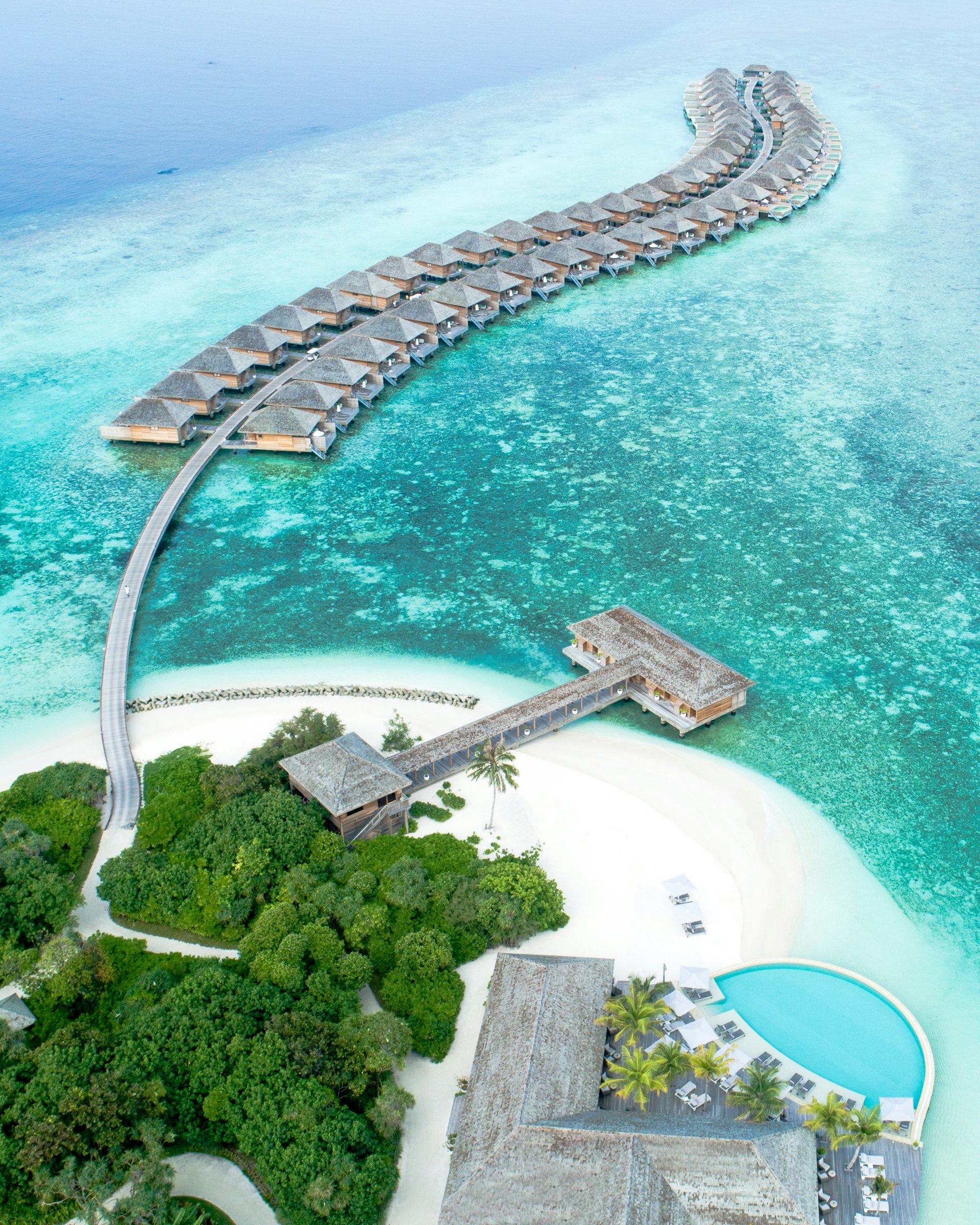
Most people picture the Maldives as one resort island, one overwater villa and one very large bill. That is one version. The other version is a local island, where Maldivians live, fish and run small guesthouses a few steps from the beach. If your main reason for going is to see mantas and whale sharks, the guesthouse route deserves a serious look. Here is how a Maldives local island guesthouse stay works, what you give up, and what you gain.
Since the Maldives opened up guesthouse tourism in 2009, local islands have gone from a curiosity to a normal way to travel. A local island is a real community with a mosque, a school, a harbour and shops, plus a handful of guesthouses and dive or snorkel centres. In Baa Atoll, Dharavandhoo is the island most wildlife travellers end up on, because it has its own airport and sits closest to Hanifaru Bay.
Hanifaru Bay is a small, shallow bay inside the Baa Atoll UNESCO Biosphere Reserve. When the tides and the moon line up, plankton gets pushed into the bay and mantas arrive to feed, sometimes in the dozens, with whale sharks joining them. Because the bay is protected, visits are regulated, with limits on the number of boats and on how long you stay in the water. A well-run trip works with those rules, not against them. We cover the bay in more detail in our post on Hanifaru Bay.
Price is the obvious one. A guesthouse room costs a fraction of a resort villa, and meals in family-run places are simple and good: fresh tuna, rice, curry, fried fish, a lot of coconut. You also get the island itself. In the evening you can walk to the harbour, watch the fishing boats come in and see kids playing football on the sand. For a lot of travellers, that is a better memory than a buffet.
There is also the practical side. Guesthouses usually partner with local snorkel and dive operators, so the boat leaves from the same island you sleep on. You are not transferring for an hour from a far atoll, and the crews know the local reefs, the channels and the regulations.
Local islands follow the customs of a Muslim country. Alcohol is not sold on the island, and in the village you dress modestly, with shoulders and knees covered. Most islands have a designated bikini beach, a stretch of sand set aside for tourists, which is perfectly pleasant but is not a private lagoon. Rooms are simpler than a resort, the Wi-Fi can be slow, and the spa is not a thing. If you want a villa with a plunge pool and a sommelier, a resort is the better fit. We compare the other major style of stay in our liveaboard vs resort guide.
You fly into Malé, then take a domestic flight to Dharavandhoo, a short hop of around half an hour. Domestic flights have luggage limits and schedules that shift, so build a buffer. We recommend arriving in Malé a day early and booking a hotel near the airport, rather than cutting it close on the same day. Our guide to getting to Baa Atoll covers seaplane, domestic flight and speedboat options.
Manta and whale shark sightings in Baa Atoll are best around the southwest monsoon, roughly May to November, when plankton blooms are strongest. That also means more rain, wind and chop, which is part of the trade. If you want the full season breakdown, read our seasonal manta guide.
If you care more about time in the water than thread count, a local island is a strong choice. If you want a quiet honeymoon with total privacy, you may prefer a resort. Many travellers split the difference, a few nights on a local island for the wildlife and a couple at a resort to finish.
Our own Giants of The Maldives expedition is built around the same idea, a small group, a beachfront stay close to Dharavandhoo, daily ocean trips including Hanifaru Bay, and the domestic flights from Malé arranged for you. The August 2027 weeks are timed to the full and new moons. If you want the manta trip without planning every boat and flight yourself, have a look at the itinerary.