
WhatsApp

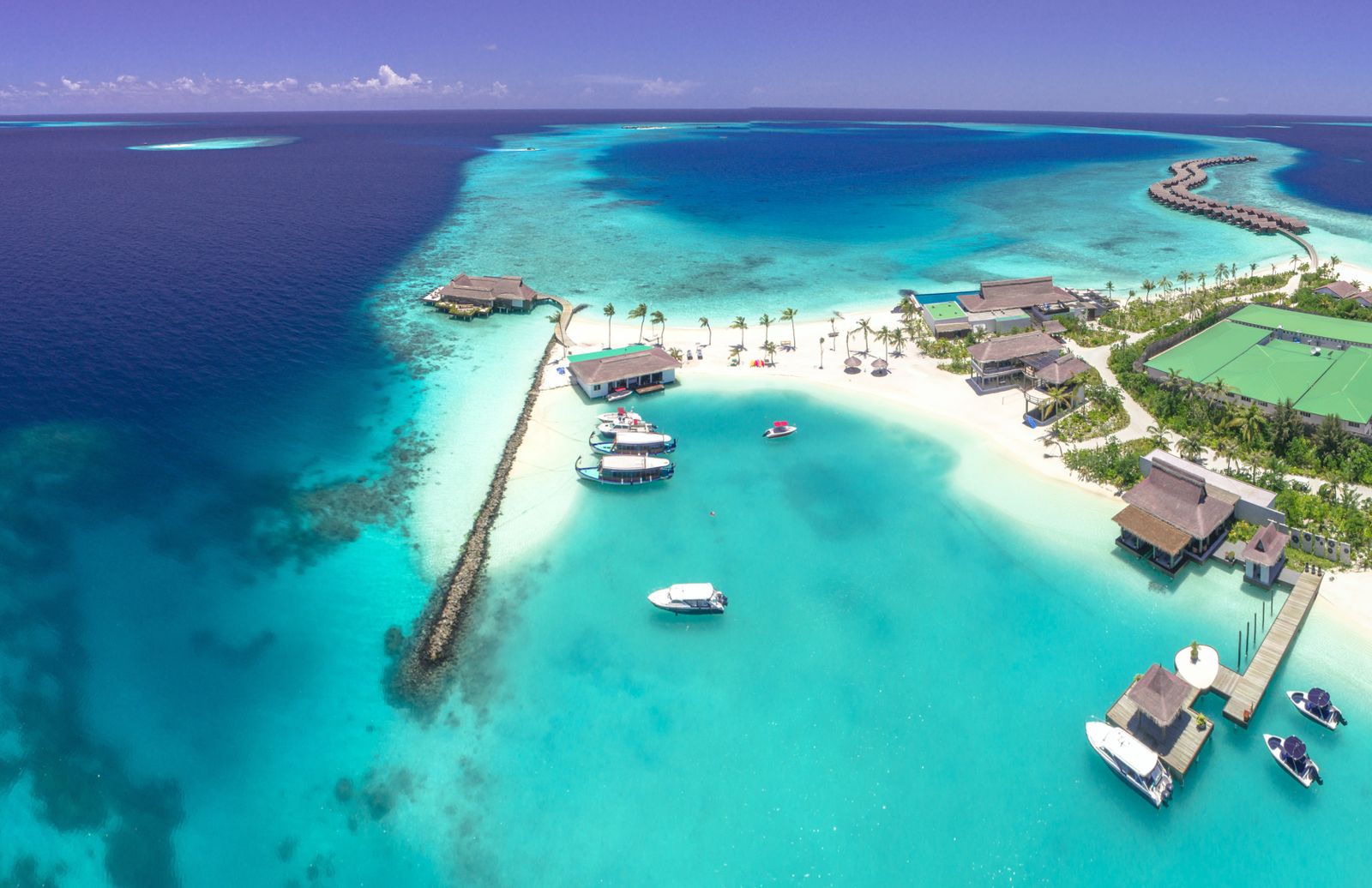
Baa Atoll is where the Maldives keeps its wildest card: Hanifaru Bay, the UNESCO Biosphere Reserve where manta rays gather by the dozen and whale sharks cruise through between June and November. But Baa sits about 120 kilometers northwest of the capital, and there is no bridge, no ferry terminal with your name on it, and no rental car. So how do you actually get to Baa Atoll? Here is the full picture, with the honest pros and cons of each option.
Every trip to Baa Atoll starts at Velana International Airport (MLE), on Hulhule island next to Male. Emirates, Qatar, Turkish, Etihad and Singapore Airlines all connect through their hubs, and from Europe you can usually be on the ground in Male within 10 to 14 hours of takeoff. From there you have two realistic ways north: seaplane or domestic flight. Which one you take depends on your arrival time, your luggage and your stomach for small aircraft.
The classic. Trans Maldivian Airways operates the world's largest seaplane fleet out of a terminal right next to the international airport, and the flight to Baa Atoll takes about 35 minutes. You fly low, around 1,500 feet, which means the whole trip is one long aerial tour of turquoise atolls, ring reefs and sandbanks. Photographers, sit on the left and keep your phone charged.
The catch: seaplanes only fly in daylight, roughly 06:00 to 16:00. If your international flight lands after about 15:00 you will not make the last departure and will need a night in Male or the domestic option instead. Seaplanes also weigh everything. Checked baggage allowance is typically 20 kilos plus 5 kilos hand luggage, and excess is charged per kilo. You cannot book directly with the seaplane operator; your resort, guesthouse or expedition operator arranges it once you send them your international flight details, ideally at least 48 hours before arrival.
Baa Atoll has its own airstrip on Dharavandhoo island, a 20 to 25 minute domestic hop from Male with Maldivian. Dharavandhoo sits inside the atoll, a short speedboat ride from most Baa Atoll islands, usually 10 to 20 minutes. Domestic flights run into the evening, so this is the standard solution for late arrivals. The planes are regular turboprops, the baggage rules are slightly more forgiving, and tickets are often cheaper than the seaplane.
What you give up is the view and the romance. What you gain is flexibility. If you are prone to airsickness in small aircraft, the domestic flight is also noticeably smoother.
Direct speedboat transfers from Male to Baa Atoll exist, but the ride takes two to three hours across open water and is only pleasant on calm days. During the southwest monsoon, which is exactly the June to November window when Hanifaru Bay fires, the crossing can be rough. We only recommend it if you love boats, hate flying, or are traveling with dive gear that blows every baggage allowance. For most travelers the domestic flight plus short speedboat is the better version of the same idea.
A few things we tell every guest. Book international flights that land in Male before 14:00 if you want the seaplane the same day. Pack soft bags rather than hard cases, they fit small aircraft holds better. Keep cameras, medication and swimwear in your hand luggage in case checked bags follow on a later flight. And do not book any of this yourself piece by piece: on an organized expedition the whole chain from Male to your bed in Baa Atoll is arranged for you, which matters a lot when a delayed long-haul flight forces a last-minute reshuffle.
The transfer is the price of admission to one of the richest marine areas in the Indian Ocean. Between June and November, plankton concentrates inside Hanifaru Bay on the right tides and moon phases, and reef mantas pile in to feed, sometimes 50 or more at once, with whale sharks joining the buffet. It is snorkel-only, tightly regulated, and unlike anywhere else on earth. That is why we base our Maldives expedition here rather than in the busier atolls further south.
If you would rather skip the logistics homework entirely, our Giants of The Maldives expedition handles every transfer from the moment you land in Male.