
WhatsApp

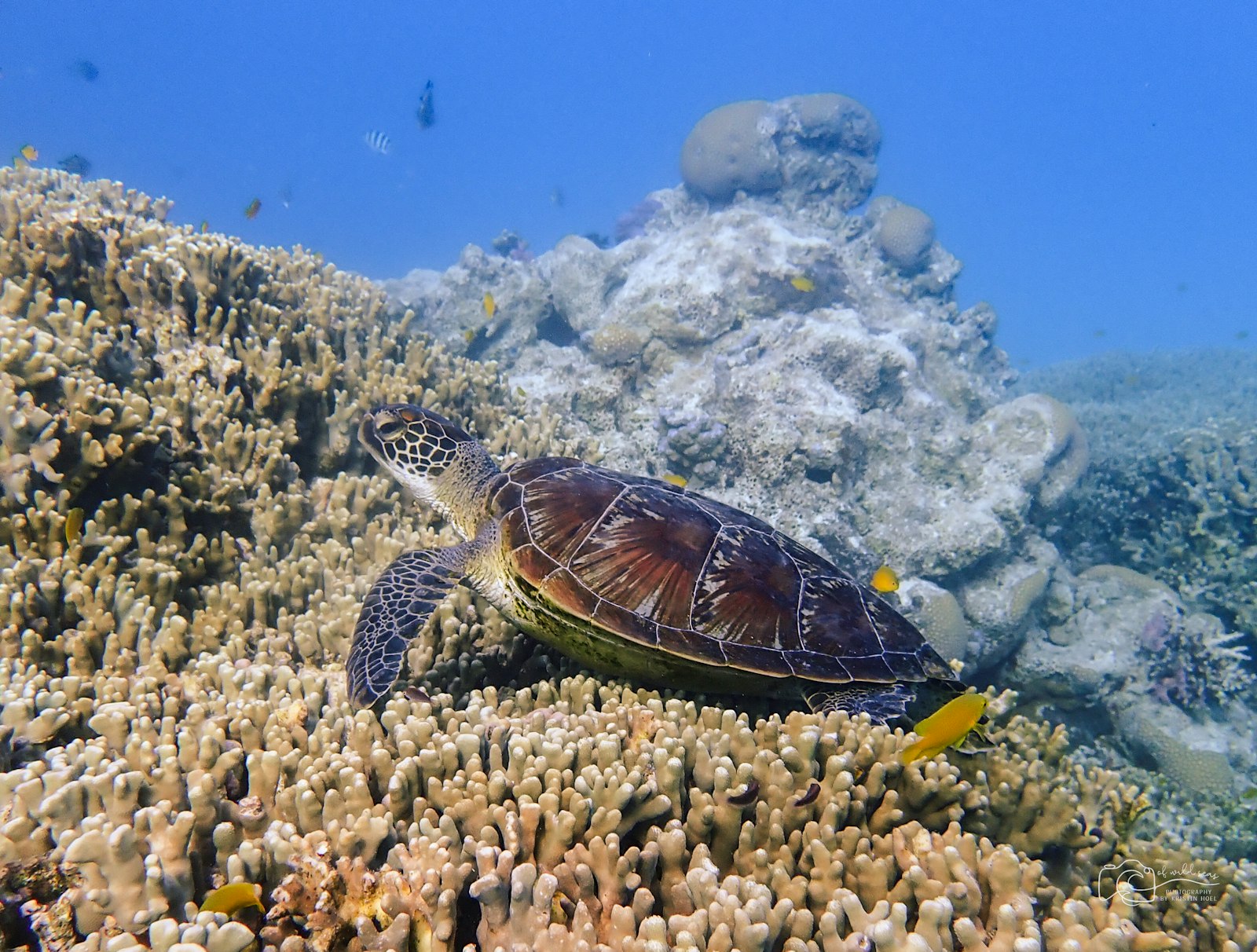
Most people assume the Maldives is a scuba destination. It is, and one of the best in the world. But it is also, in a very specific way, one of the best snorkeling destinations on the planet.
If you have been putting off the trip because you never got around to a scuba certification, you should stop putting it off. Here is why.
Three reasons, mostly geographic.
House reefs. Almost every Maldivian island, resort or local, has a fringing reef that starts a few metres from the beach. You walk in with fins on. In one metre of water you already see butterflyfish and moray eels. Beyond the reef edge, the wall drops off. That gives you a proper coral wall to swim along without a boat, a guide, or any qualification.
Sheltered lagoons. The atolls create warm, calm lagoons. Water temperature sits around 28°C to 30°C year-round. You do not need a wetsuit. You do not need to fight currents to look at fish.
Big animals in shallow water. Manta rays feed at the surface. Whale sharks feed at the surface. Reef sharks, turtles, and eagle rays all cruise the top few metres of the reef. In the Maldives, the show is not always fifteen metres down. Often it is right where a snorkeler already is.
If you flew to the Maldives to swim with manta rays, the single most famous place to do it is Hanifaru Bay in Baa Atoll. It is a UNESCO Biosphere Reserve, and the authorities banned scuba diving inside the bay.
The reason: bubbles disturb feeding mantas, and the bay is small enough that diver bubbles can push the animals out. So scuba divers who fly halfway around the world for Hanifaru still end up snorkeling it. A qualification will not get you closer to the mantas than a mask and fins.
That fact alone rearranges the "should I get certified" question for a lot of first-time visitors. If Hanifaru is on your list, snorkeling is the entry ticket, not the compromise.
Being honest, some experiences in the Maldives are only accessible with a certification.
So if your dream trip is centred on channel drifts and deep sharks, get certified. If it is centred on mantas, whale sharks and a colourful reef, you already have the qualification you need. It is a good mask.
Freediving sits between the two formats. It is essentially athletic snorkeling. You hold your breath, drop down a few metres, spend a moment closer to the animal, and come back up.
For fit travellers, a couple of days with a freediving instructor early in the trip can transform your Maldives week. You get closer to the cleaning stations, get better photos, and interact with mantas in a way most snorkelers cannot. You still do not need a scuba tank to do it.
Our own approach on a Maui expedition leans this way. Snorkel-first, with optional freediving coaching for anyone who wants to go deeper. Reasoning: it keeps the group inclusive, avoids the split between divers and non-divers that resort trips often produce, and matches the reality that most of the Maldives' best animals are near the surface anyway.
A rough decision tree, honestly:
For snorkelers, three items make more difference than everything else combined:
A mask that fits your face. Not a cheap airport mask. Try it on, breathe in through your nose without the strap on. It should stick. Leaks ruin snorkel days.
Long-blade freediving fins. More efficient than short reef fins. You will kick less and see more.
Reef-safe sunscreen. The reflected sun off the water burns the back of your neck and calves in an hour, even under a shirt. Chemical sunscreens are banned at many Maldivian marine parks. Bring a mineral zinc-based one from home.
Optional but valuable: a decent action camera like a GoPro or Insta360. You will regret not having one when a manta glides two metres in front of you. We wrote a longer piece on choosing an underwater camera and one on GoPro vs Insta360 vs Sony for the trip.
The Maldives does not owe scuba divers anything. Snorkelers get some of the country's best experiences at no depth at all. If you have been holding off on booking because you never got certified, book. Then, if you enjoy it, get certified for the next trip.
If you want a small-group Maldives week designed for snorkelers, freedivers, and casual scuba divers together, see the Maui Maldives expedition. Or message Kenny with a specific question.