
WhatsApp

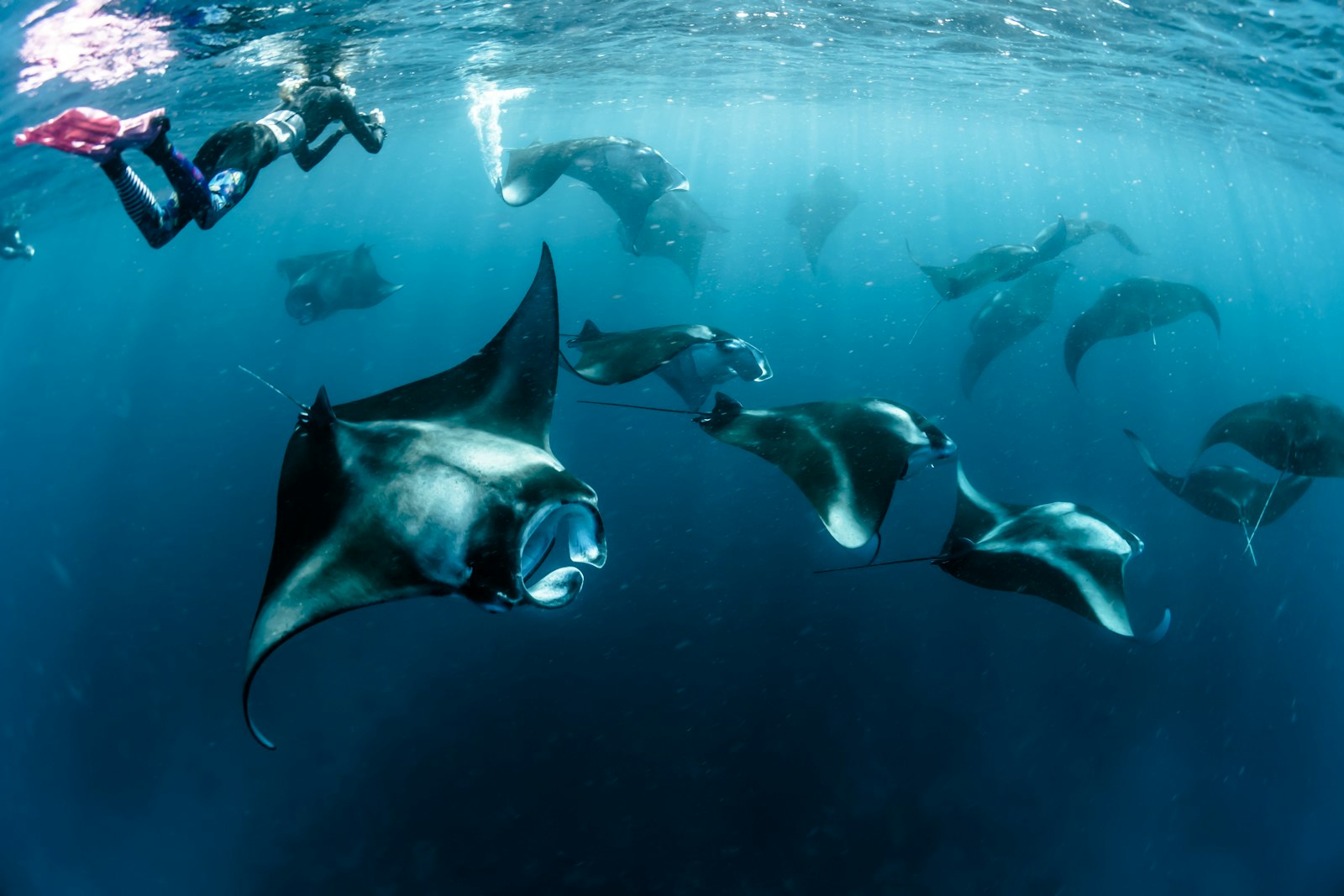
The Maldives is one of the few places on earth where you can, on the same trip, snorkel next to a whale shark in the morning and count fifty manta rays through your mask by lunch. But only if you get the season right.
The country sits along the equator, so the "hot in summer, cold in winter" logic most travellers grew up with does not apply. What matters here is monsoon wind direction, plankton, and full moons.
Below is what actually decides whether you see the animals you flew halfway around the world for.
The Maldives has a northeast monsoon roughly December through April, and a southwest monsoon roughly May through November.
Northeast season means blue-sky postcard weather, calm seas, and famously good visibility. Southwest season means shorter storms, choppier crossings, and greener water full of plankton.
Most travellers assume December to April is "the good season". For sun-loungers and honeymoons, they are right. For the reason we go, they are only half right.
Mantas and whale sharks are filter feeders. They follow plankton. Plankton follows nutrient-rich currents. Currents flip with the monsoon.
That gives you a simple rule:
If you only remember one thing from this article, remember that.
Hanifaru Bay is a small U-shaped inlet on the eastern edge of Baa Atoll, protected as a UNESCO Biosphere Reserve. When the southwest current pushes zooplankton into the bay and the tide traps it there, mantas arrive in numbers that sound made up. Fifty in the bay is a normal day. On the best days there are over a hundred, and whale sharks show up to feed alongside them.
Peak months are August, September and October. The full moon and new moon around those months produce the strongest tides, and the strongest tides produce the biggest feeding events.
Two things to know before you book Hanifaru specifically:
Around Hanifaru, the rest of Baa Atoll has plenty of good scuba diving too. Manta cleaning stations, reef sharks, and gentle drift dives sit within a short boat ride.
South Ari is the other big draw. Its outer edge has an ocean wall where whale sharks patrol, and success rates on dedicated whale shark trips run high in this stretch.
Whale sharks live here year-round, so you have a real chance of seeing one in any month. What changes is how easy it is to spot them. From November through April, water is clearer and seas are calmer, so aerial spotting boats have a better view of the dark shape below the surface. From May through October, plankton makes the water greener and the sharks less visible from above, though you may see them closer to shore.
Manta cleaning stations in South Ari also work year-round, with a small peak in the northeast season.
Water temperature stays around 28°C to 30°C all year, so wetsuit choice is more about comfort during long safaris than survival. A 3mm shorty is usually enough.
Locals sometimes call the southwest months the "green season" because plankton clouds the water and afternoon squalls are common. That reputation scares off casual tourists, which is exactly why serious wildlife travellers like it. The dive boats have room, the resorts have space, and the animals show up.
Rain in the Maldives usually falls in short, warm bursts. It does not spoil a diving day the way three days of drizzle can spoil a hiking trip.
The strongest tidal currents happen a day either side of the full moon and new moon. That is when Hanifaru fills up with plankton, and when the outer channels of Ari get their best manta rides. If your travel dates are flexible by even a few days, look up the moon calendar and shift accordingly.
On a Maui expedition we plan the itinerary around these dates already. It is one of the reasons we go with a small group by application, rather than a fixed weekly departure.
There is no perfect month. The northeast season is comfortable but you trade the Hanifaru show for it. The southwest season is bumpier and greener but gives you the aggregation that put the Maldives on every marine wildlife wishlist in the first place.
If your goal is to see manta rays and whale sharks in numbers, book between August and October and lean into the weather. If your goal is a mix of comfort, colour and a whale shark encounter, book between December and March and centre the trip on South Ari.
Either way, avoid June and early July unless you are on a well-run liveaboard, because that stretch is when storms are most likely to disrupt crossings.
Our small-group Maldives trip is built around the eastern-atoll aggregation season, so we time it for when Baa is producing. We keep the group small, stay beachfront on Baa Atoll close to Hanifaru Bay, go out on the water every day to wherever the animals are, and dive with a marine biologist who knows the cleaning stations personally. If that is the kind of trip you are looking for, see the expedition here or message Kenny on WhatsApp.